Showing posts with label fiction. Show all posts

Thursday, June 30, 2016

Librarything Member Giveaway: A Natural History of Hell

Author: Jeffrey Ford
Genre: Horror, Supernatural
Pagecount: 281 (ebook)
Warnings: Death, Murder, Violence, Rape, Dismemberment, Domestic Violence, Dolls, Spooky shit, Kitchen Sink
Rating: 4/5

"A Natural History of Hell" is a collection of short stories that span a remarkable range in location, time period, genre and atmosphere. They all have a supernatural theme, but I was genuinely impressed and how wide and varied the flavor of stories spanned. The only consistency is the austere language. The prose was clearly written and easy to read, even when the events of a particular story were on the edge of what I could handle. This kept what could have been wildly divergent moods from giving me emotional whiplash (in other words, I liked it).

This lovely collection of stories are clearly the culmination of many skillful experiments into a multitude of literary traditions that were pleasurable to read with nary a dull moment.

Since I have very little that can be said about the entire collection together aside from how widespread it is, the meat of this review are short opinions on the individual tales.

The Blameless: A surprisingly sweet story of a married couple attending a coming of age ceremony for their neighbor's daughter, specifically her exorcism. An okay short, but interesting to me largely as an example of gendered emotional labor.

Word Doll: Creepy in the way only dolls can be, made of words or otherwise. Reminded me of the midwestern folk horror that the TV show Supernatural does so well. Perhaps my favorite story of the collection.

The Angel Seems: Some truly weird supernatural events, kidnappings, extremely creative deaths and a plethora of (presumed) good old fashioned rape. I have very mixed feelings about this story, because so many ladies get raped that it becomes mundane (that's gross as fuck), but the ending is by far the best ending any story can have. Mixed!

Mount Cherry Galore: This is a coming of age story with some more magical elements included than usual. I admit this one was nice but didn't stand out for me.

A Natural History of Autumn: A young yakuza meets a hostess and has a very trying adventure in the mountains. It was a nice surprise to see a local folk horror story from a completely different tradition. I think my only point of comparison for this was Kwaidan so I can't tell you how faithful it was to Japanese horror, but I definitely had fun reading it.

Blood Drive: By far the scariest story for me, since this year it hits a little too close to home. Think of this as the Handmaiden's Tale but for the NRA instead of evangelical christians.

A Terror: In April of 1862 Emily Dickinson wrote a letter to a friend in which she said "I had a terror since September...". Ford imagines what she experienced. I liked this story because it diverged in tone from the other stories; in deference to Dickinson it was more fantastical and lyrical, which was delightful.

Rocket Ship to Hell: One author relates the strange tale of his trip into space to two of his fellows in a dimly lit bar. This one is a call-back to golden age sci-fi, with all of it's bad science, shady old men and sexism. Hard pass for me.

A Fairy Enterprise: A Victorian entrepreneur hits on a new business venture, and it doesn't go at all to plan. This was a nice palette cleanser for me, a pleasing mix of English fairy tales and Charles Dickens.

The Last Triangle: A down on his luck drifter is welcomed into the life of an older woman with some very dangerous secrets. Another nice story, a little like the John Constantine comics in that all of the characters are both flawed and magical.

Spirits of Salt: A Tale of the Coral Heart: The tale of a man with a legendary sword and the badass women in his life. I wish I knew what literary tradition this story was from. I'm leaning towards far east, maybe India, but I couldn't say for sure. I liked the way the story was told, and the main characters were all super cool. I would love to read more like it!

The Thyme Fiend: After a young man discovers a body in a well, he can't stop seeing the ghost of Jimmy Tooth unless he drinks thyme tea. There were some very dreamlike aspects to this story and I couldn't help falling into them. I found it deeply engaging, would recommend.

The Prelate's Commission: A talented young artist is commissioned by the local prelate to paint a true picture of the devil. While I usually delight in religious iconography, this was one missed the mark. I got the impression it could have been fleshed out into a full length novel, since this version was a bit rushed.

Sunday, May 8, 2016

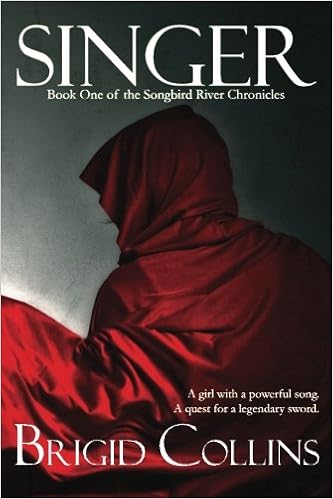
Librarything Member Giveaway Review: Singer

Author: Brigid Collins
Genre: Fantasy/Sci-fi/YA
Pagecount: 204
Warnings: Death
Rating: 4/5

I'm so pleased with how this story came together, especially the last third of the book!

"Singer" by Brigid Collins starts out as the adventure of the eponymous character, a woman who would be mute if she couldn't sing the most beautiful wordless melodies. Singer teams up with a ragtag group of adventurers on their way to plunder the mysterious depths of the bluntly named "Nameless City", to which she is inexplicably drawn. As they travel through a place so old that everyone who has ever lived there is dead with their bones turned to dust, it becomes clear it's every bit as dangerous as predicted. And the storytelling and imagery remains excellent right up to the finale.

Admittedly the action starts slowly, and during the first few chapters I didn't quite know why I kept reading. However it was easy prose, well worth continuing, as my empathy towards the characters grew organically as a result of the pacing. By the time the threats start showing up deep inside the Nameless City you're invested in everybody, so I would say the pacing works out well enough. Besides which I want to give credit where credit is due and recognize that the monsters were fuck-off scary and I feared for character's lives, so good job there. I'm hesitant to spoil anything, so it the most vague terms I'll say my personal experience as a computer programmer was irked by a plot point. It was bad, but it wasn't "Hackers" bad.

Ah, seriously. All you really need to know is that Collins spun a good tale. You know how sometimes, after reading a book, you just sit back with a sigh of contentment and think "that went exactly how it should have gone"? Fairy tales in particular often end with the reader content that all the foreshadowed events happened and all the seemingly disparate threads have been tied together? That's how this book left me, and I loved it.

Actually I was a little panicked as I neared the end; I firmly believe Singer's world should be way better explored, but I hear there is a sequel, so that solves that!

Friday, May 23, 2014

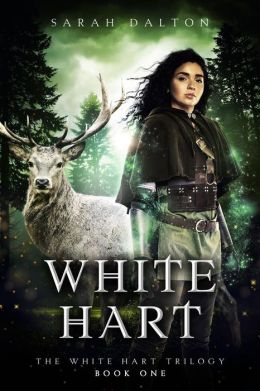
LibraryThing Member Giveaway Review: White Hart

Author: Sarah Dalton
Genre: Fantasy
Pages: 220
Warnings: Violence/Character Death
Rating: 3/5

"White Hart" is the story of Mae Waylander, a mysterious young woman with the power to control nature and her faithful companion Anta. However her powers are in high demand, and when a local girl Ellen is kidnapped after pretending to wield Mae's powers, she reluctantly accepts the help of  Prince Casimir and they follow her into the Waerg Woods. Along the way they discover the woods just as dangerous as they've been warned, and there are more secrets hidden behind the trees than they could have suspected.

This is a good story with several emotionally complex, interesting characters. Mae, Casimir and Sasha are all a good blend of strong and able to depend on other people. All three of them are capable of some very badass action, but they also all have some internal struggles that makes it hard for them to respond to all threats. I appreciate the sense of realism that lends to the story, especially since despite everything else, they are all pretty young. In addition, there's a small amount of romance in the story, but it takes a major backseat to the action, which I was fine with.

In general I thought this was a solid YA fiction story. They plotline slows down a little in the middle of the story, but picks up again after Mae does some soul-searching. Most of the individual action scenes were well-written, and they carried the story well. It was a nice, easy read, but it kept me interested. However I don't think it would appeal much to someone who doesn't already enjoy YA fiction and magic.

What was especially interesting to me from a gender representation perspective is that even though women were overrepresented in the main characters (2:1), the overall gender breakdown was still slightly more in favor of dudes (11:15). There weren't a lot of characters in this story because most of the book is set in the middle of a forest. Therefore the disparity could be a coincidence, but I'm not entirely convinced. Maybe if I find a considerable amount of books that go the other way?

On another note, several of the characters were significant to the plot but weren't given names, so I kept track of all characters, regardless of how well they were named. I also kept track of any character that had a name even if they didn't appear in the story, like Mae's mother, who while dead during the book played a significant role in the main character's upbringing. Either way the ratio was quite similar, so I'm going to try and follow my previous standard, characters that are named (even if not with exact names, anything more complicated than "the woman"), alive or dead.
Graphs, motherfucker. Do you read them?


Saturday, April 6, 2013

Pop Review: Prey


Author: Michael Chrichton
Genre: Science Fiction
Pages: 258
Warnings: Character death
Rating: 3.5/5

Prey is a science fiction drama that answers the question “What would happen if a self-sufficient, violent AI went rouge?”


Crichton’s story answers while delivering a plot that keeps you busy in a bold, engaging style. I found it to be a fun read to finish in one or two sittings. In addition you can consider some of the cool implications of distributed computing and nanotechnology while you read.


However if you’re looking for a story that challenges your observational skills or tests your philosophical inclinations, back off. This book is basically just action. The characters are simplistic and the only thing I was worried about was who would survive (other than the narrator).


On the other hand, not all novels are about in-depth characterization, so if you liked other Crichton or Clancy books, pick this up and prepare to enjoy. If you’re going on a long airline flight this is also a good choice. Have fun!

Edited: Cross-posted at LibraryThing and Amazon.

Monday, January 30, 2012

Member Giveaway Review: Secrets and Lies

Author: Tracy James Jones
Genre: Fiction, Slightly Erotic Fiction
Pages: 158
Warnings: Grammar Carnage, transphobia?
Rating: 2/5

This novel follows the lives of Ken Jordan, Cami Vargas, Ulanda Jefferson and Bren Searcy as they unravel the secrets they each keep. The novel starts with Ken and Cami having an affair, which Cami confides to her best friend, Ulanda. However it turns out that Ken's affair happened right before he proposed to Bren, and Ulanda and Bren have a close relationship of their own. Throughout the book, these four characters reveal to each other some secrets you know about and some you don't.

 My first feeling upon finishing this book was that there was something slightly wonky about the plot. In actual chronological order, Ken and Bren are highschool sweethearts, but Ken breaks up with Bren because he's a jock. Bren parents Ulanda with a different person (not a major character). Several years pass, Bren gets back together with Ken. Cami and Ulanda become friends. Ken cheats on Bren with a lot of people, including Cami, then asks Bren to marry him. Cami gets pregnant and gives the baby to Ken's parents. Bren gets upset about this and goes back to her hometown to talk with Ulanda about all of this, and then Bren meets Cami. None of these plot devices are unbelievable, but they do seem extremely ridiculous when taken together. Or at least, they are the actions of rational actors who I can not empathize with at all.

In addition I was freaking offended by the treatment of Ulanda's bio-mom. Apparently Bren got pressured into sex with a trans man, which was probably rape. However no one could be damned to used the right pronouns, or treat him with any decency. This was especially startling to me after the attempts made to treat Bren, a trans woman, with respect. Apparently you only have to respect the rights of trans people you like.

This book just didn't grab me. I couldn't convince myself to like the characters, with the exception of Ulanda.  I can't suggest this book to you unless you like cheesy romance novels.

Saturday, January 21, 2012

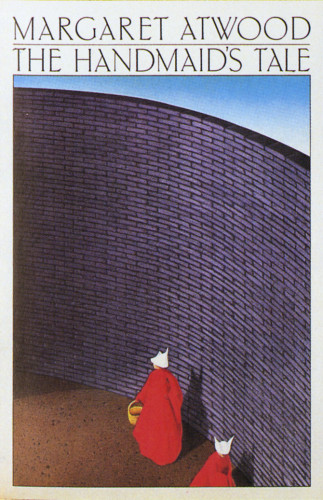
Review: The Handmaiden's Tale

Author: Margret Atwood
Genre: Distopian Future Fiction
Pages: 324
Warnings: Holy shit, so much.
Rating: 4.5/5

"The Handmaid's Tale" by Margret Atwood is set in a dystopian future where a fanatical religious organization has taken over the US government and enforce a restrictive hierarchy. The main character, Offred, is one of the few women left in the country who can successfully reproduce, so she's been forced into servitude. This novel is her fictional first-hand account.

There is so much I love about this novel, I have trouble picking a place to start. If there was a gun to my head, I would start with just how fucking scary this novel is. There is such horrific dehumanization of every woman in the world Offred lives in this world that I shudder to imagine something thinking about me (and my female ass) that way. We don't even know the main character's name: Offred is literally "Of Fred", Frederick being the head of her household. She has no humanity outside of being a keeper of his sperm. That is pretty damn scary, until you consider how everyone deals with this enormous decay in women's rights. They just go on. All of the characters are trying to just get through the day, and they do that by pretending all the horrible things being done to them and the people doing those things to pretend the all the horrible things being done to them by real people are just happening. Once you realize how easy it would be for people here and now to ignore on that scale, you start waking up in a cold sweat.

There's also something really amazing about Offred's narration style. Some authors find the first person perspective to be stifling, because the scope of one person is often to small to encompass the plot. Atwood doesn't fumble around trying to get Offred to listen in on the right conversations to find out what Old Man River is up to, she incorporates the supposed limitations of the 1st person narrative into her story. Only being able to see what Offred sees, we're trapped looking between the confines of her habit, and the claustrophobia a reader feels is not unlike her's. Every aspect of Offred's narrative, from her hesitant grasp on reality to the tiny window of the world she can see, is finely crafted to put the reader in her painful shoes. It's wonderful so see a story where there is not a wasted word.

I can't get enough of this book, and I expect you won't either. I won't lie to you and pretend it's an easy read, since the narrative style is intentionally a little frustrating. However this is one of those books where the feeling you get when everything Atwood has orchestrated comes together is well worth any discomfort you felt along the way. This book isn't just a good read, it's got a lot to consider about human nature at it's tasty center. And if that stirring endorsement doesn't encourage you, realize this is a realiatively short book, so dig in. 

Sunday, January 8, 2012

Member Giveaway Review: Tempest

Author: Holly Hook
Genre: YA Fiction
Pages: 190
Warnings: Ahoy Plot Holes, Spoilers
Rating: 3/5
Series: 1/?

"Tempest" by Holly Hook is a YA fiction book, the first in the "Destroyers" series. It follows the main character, Janelle, after she moves to Florida and strange stuff begins happening. Janelle and basically everyone she knows or is related to is a Tempest, a strange sub-group of humans that become hurricanes once in their lives, and can do that really cool thing with their eyes that's shown on the book cover.

Before I say anything else, I want to make it clear that the premise of this book is freaking awesome. I cannot stress that enough. I don't pretend to understand that people who can turn into hurricanes any time they fall in salt water only do so once in their lives, because if I could turn into a hurricane, look out coastal cities! I did some research, and was a little annoyed to discover the named hurricanes that the WMO picks repeat every six years, but I stick like the concept that Tempests have a government mandated role call. If you've already read the book, feel free to follow the same wikipedia/google trail I did and be disappointed there is no Hurricane Adriana (although there have been several Adrians) or Hurricane Janelle in the real world. I am not against fiction books that borrow part of their information from reality, but I guess I was a little surprised by how easy it would have been to incorporate real hurricanes and give the book more of a "hidden world within a world" feel. Even though the ability to become some of the scariest, most powerful tropical storms is just fantastically cool, I would have preferred Hook had either completely veered off into a fantasy setting or maintained a more accurate representation of where the Tempests could have fit into our world.

I also really appreciated the characterization of Jenelle, Lucas and Greg in this book. I am crushed when I read books where the teenage characters sound and act more like some adults ridiculous caricature of teens, or characters that jump right from being pre-pubescent to being adults. Hook breathes life into Janelle, and into that awkward place where teenagers reside, which I loved. The developing relationship between Greg and Janelle was especially believable, not to mention cute. I am a suspicious person by nature, but their stolen  moments warm my heart. I got very caught up in those scenes, and the transparency of Janelle's reactions. In general I think Hook has strong talents when it comes to portraying teenagers, and teen interactions.

However I didn't feel the depth of characters extended to some of the the adults (ex: Adriana, Mr Deville). I can't tell if the lack of well developed personalities because they weren't main characters, their actions were more plot than personality driven or if it was a conscious effort to help illustrate Janelle's snap judgments. It would be really cool if they were a result of some method writing, but I'm not comfortable assuming that. Sometimes this bothered me, but certainly wasn't a deal-breaker.

I am a stickler for internal consistency in a story, so I take umbrage with a few of the plot points. I realize how silly this may seem to someone else, but it frustrates me that not all named tropical storms are Tempests. I don't understand why it was mentioned in the book. Additionally it makes little sense that there is a magical system that knows when when it's someone's turn to become a Tempest (and can halt all the other Tempest's ability to become hurricanes) down to the day but none of the actual Tempests seems to know even what month they should become a hurricane. It's also odd that there was very little about Tempest culture explained, but somehow Adriana knows how to brainwash the Tempest subconscious. I wouldn't normally bring up all of this, but the crux of the issue was that all of these plot devices could have been incorporated reasonably well, but at the time they all felt too convenient to me. Janelle would never kill people on purpose? Suddenly, Adriana can control her subconscious by playing only one tape while she's asleep for an hour (while back in reality brainwashing of an unwilling participant can take years under special conditions). That is just an example of the frustrating plot holes in this book. Said plot holes dragged me out of the book to complain, which is not an ideal reading experience.

It may look like I have a lot of complaints, but I really did like this book. I'm just kind of pushy. So while I have a few complaints about the deus ex machina style plot devices creeping into Hook's novel, they did not overshadow the excellent characterization and straight-up awesome premise. I was definitively entertained, even though I usually prefer to avoid YA. If you are a teen or just like reading teen fiction, I would strongly recommend this. Jump all over it!

Monday, December 26, 2011

Pop Review: The Birth of Venus

Author: Sarah Dunant
Genre: Historical Fiction
Warnings: Rape, Misogyny, Death, Asshole Priests
Pages: 416
Rating: 3/5

"The Birth of Venus" by Sarah Dunant is the coming of age story of Alessandra Cecchi, a young woman in 15th century Florence. Like many mainstream stories about young adults, this book is not for teenagers, or even written by teenagers. Do not ask me why, apparently everyone wants to keep reliving the same four hormone-ridden years in high school. Sadly for us Florentine isn't so hot on women having lives outside of gratefully raising children, so some parts of Alessandra's story are remarkably predictable: she doesn't know anything about sex expect for those tinglings in her britches until marriage, where regardless of her personal feelings or ambitions she settles down to have a kid. No matter how overdone I think coming of age stories are, this one has a few surprises up it's sleeve. For starters, her city is in turmoil and there is a rather scary priest rising to power during all of this.

For one, Durant's characterization was great. All of the characters were as fleshed out as their role required and their interactions were believable, especially the awkward teenage groping! I have my doubts that the idioms and slang are historically accurate, but luckily that's not what I was reading this book for. My absolute favorite character was Alessandra's husband. Since there is a theme of woman's lib running throughout this book, it would have been easy to make him a villain, nor was he some fumbling buffoon. Instead Durant creates a man who is poised, intelligent man who was also suffering under the pressures of Florentine society, with a very human set of blind spots. In my mind he remains the best example of Durant's ability to create complex and empathetic characters in this book.

I typically enjoy historical fiction but this particular period didn't come across as very interesting to me. I'm not sure if it's because I have about as much fascination for paintings as a cat does (which is to say, only if there's a bug on one) or if Durant presented the least appealing bits to me. I feel this way because the location and time period had very little affect on the story itself. Sure, sure she got married when she didn't want to. There are certainly no where else during that era and no other time period in history when women got married because it was expected instead of out of love. Her city fell at least partially under the sway of a radical man. The only obvious way in which this affected Alessandra's life was one or two scenes where she didn't go to church and where she got hassled for walking outside after dark. Hell, Florence getting invaded by an army had only one affect on the story that I could see: Alessandra's wedding date got moved up. This may have been a historical fiction, but the history functioned primarily as a background for the plot. This is not an inherently bad thing, but I do feel it's worth pointing out. It's also totally why I am not mentioning anything about painters.

My main complaint about the plot is that there was not nearly as much action as I was expecting. I respect a good story that doesn't have sweeping story arcs that encompass epic events, but only when I'm not promised them. Even the really dramatic twists were rather underplayed, and everything had a haze of normality to it. This could just be me, but I swear the prequel suggested the book contained a lot more sex (or at least sexual tension) which it failed to deliver on. I kept reading until the last chapter waiting for something more impressive than a few mildly vanilla sexual encounters and perhaps the least awesome explication for her tattoo. Seriously, I can not even imagine a less cool way for Alessandra to have gotten that tattoo.

There is a very reasonable argument to be made that stories full of real, not dramatic people trying to successfully navigate the challenges of their daily lives wouldn't come of as dramatic, to which I say: "Pah." I am reading a book about a teenager. I remember being a teenager, and let me tell you, every day was the Thor-damned end of the world. On the other hand, gentle reader, you may not feel the same. I suppose my final assessment would be: I've had better. If you really enjoy the romances of teenage girls (really?) or 15th century Florence, have I got a book for you. If you have a quiet afternoon or two and nothing to do, go for it. Otherwise find a different book. There are plenty other fish in the sea! 

Tuesday, November 29, 2011

Review: And Then There Were None

Author: Agatha Christie
Genre: Mystery
Warnings: Brits, Murder (obviously)
Pages: 247
Rating: 4/5

This is a really great mystery novel. It's quick, fascinating and fun. I've never read any Agatha Christie novels before now, but her other works are on my to-do list now.

I liked that the characters reminded me a little of the secondary characters in Doyles "Sherlock Holmes" stories, possibly because Christie was also an upper-crust Brit, although from two generations later. However the break from a sleuth main character was excellent, because the first person perspective lent a sense of urgency to the wholw thing. I enjoyed the shifts in perspective, which happened often enough and were well-placed enough to keep the identify of the murderer a secret from me.

Like I said, this book was quick. I  finished it in one sitting, which is terrible for the sort of literary analysis more involved than "So who is killing everybody?" On the other hand, this novel didn't have to be ripe with flowery language to be interesting. This is common for mystery novels, but agonizing over the villain (or villains) is usually the only draw a good mystery novel uses, and the only one it needs. I found that to be the case here. As Christie herself pointed out, there's something truly impressive in a killer that manages to kill ten people in a way that keeps a casual reader interested.


Similar Books and Authors
"The Complete Sherlock Holmes" by Sir Arthur Conan Doyle

Sunday, October 30, 2011

Review: Young Miles

Author: Lois Mcmaster Bujold
Genre: Science Fiction
Series: 1-3/22+
Warnings: Ableism
Rating: 4.5/5

There is something fantastically wonderful about this series. I'm revealing my preferences here, but these books have a feminist sensibility that is beyond refreshing. In addition they're all short with thrilling plot-lines! It makes it hard to put a Vorkosigan book down once you've started. Still, there is so much worthwhile going on in these books. They're fantastic! Check 'em out.

I should point out that "Young Miles" is actually an omnibus of Vorkosigan books, starting with the novel in which Miles is the youngest and continuing with two short stories in internal chronological order. In the case of this omnibus all three stories are also in real-world chronological order, but that isn't always the case. I think it's pretty cool that a few of the books that take place later in Miles' timeline were written before parts of "Young Miles" (publishing order can be found here). My general stance on anthologies from a single author is "No, thank you," because all the books are written by the same author around the same period of time, so they share similar themes and ideas. However this anthology (less so than "Miles in Love")  feels like it was written by several different authors.The staggered nature of each story in the publishing order does a good job of cutting out any feeling of monotony.

For this reason I'd prefer to offer a short review for each book:

The Warrior's Apprentice (1986)
This was the weakest book in "Young Miles" in terms of plot. Looking back, it felt like Bujold had a very specific set of things that she had already determined would happen in this book and had to fit them in. However, it took a while for me to reach that realization: the plot is rushed in the same way as a movie chase screen. While reading, I paused maybe once in the 200-some pages to wonder if everything was falling into place just a little too ridiculously perfect, but then I immediately dived back in.

In terms of characterization it was a fantastic hook, clearly showcasing the best aspects of Miles Naismith: how brilliant, charismatic and goddamn lucky he is. If you need a reason to read these books, Miles is it. He's one of the greatest main character's I've ever read. Sure, he's a walking cliche, but the Vorkosigan books in general and "The Warrior's Apprentice" in particular serve as a reminder why cliches exist: when done well, they're irresistible.

The Mountains of Mourning (1989)
This is a very touching short story, but I don't think murder mysteries are Bujold's (or Mile's) strong suits. I found the plot good, but not great. All the characters beyond Miles were only mildly interesting (aside from Ninny, obviously) and the conclusion of this story was far sadder than I was expecting.

I sometimes imagine the Barrayarans as slightly British in the sense that they cling pretty desperately to their monarchy, and they all have an attitude of stiff upper lip when it comes to personal tragedy. Many of the characters across the Vorkosigan universe never speak openly of exactly what's bothering them, and it lends a sense of authenticity to everything. Out here in the real world, few people will open up and spill their deepest secrets after you've known them for a few days, but the characters in "The Mountains of Mourning" did. I recognize the brevity of the story is partly at fault, but it still bothers me a little.

Something wonderfully positive I'd like to say about this book is ahead of it's time in representing ableism.

The Vor Game (1990)
This was my favorite book of the "Young Miles" omnibus! It has all the same rushed, thrilling plot as "The Warrior's Apprentice" but it didn't seem as outrageous. One of the strongest points about Bujold's writing is her ability to create a sense of suspense that lasts an entire novel. There was no point in this story where I didn't desperately want to know what was going to happen next.

Bujold is also good at creating a memorable cast. Tung, Bel and Gregor are all distinct, interesting (fictional) people who it's possible actually care about. Miles is the creme de la creme of poignant characters, as you might imagine. He reminds me a little of Ender from "Ender's Game" with his unflappable charm and brilliance. Unlike Ender he's around 19 at this point and significantly more interesting for it.

Freebies
"The Warrior's Apprentice" and "The Mountains of Mourning" located free online.

Similar Authors and Books
"The Dispossesed" and "The Left Hand of Darkness" by Usrula K. Le Guin
"Ender's Game" by Orson Scott Card

Sunday, October 9, 2011

Review: Ember and Ash

Author: Pamela Freeman
Genre: YA Fantasy
Pages: 498
Warnings: N/A
Rating: 2/5

I don't have a strong endorsement of this book. There were some wonderfully entertaining qualities to her prose, particularly the well-developed setting, probably because this book is a one-off of her Castings trilogy. However the characters were a real weak point for me. I had trouble distinguishing their personalities, and I didn't care too much for any of them aside from Martine (Ember's mother).

Freeman's setting is top-notch. The environment created by the local gods who oversee matters local matters like death with the Powers who function as the Elements at their most animated was lovely. I appreciate the depth that went into them, as well as the myriad of people who communicate, worship and work for them. I got the feeling Freeman created a complete world and only showed us the bits we needed to see, which I love.

However, there were some really annoying aspects of this book that I want to caution readers about. There is a host of side-characters, and it's really obvious they have a sub-plot created especially for them with no real value to the Ember/Ash storyline. The sense of urgency created by the sub-plot involving Arvid (Ember's father) was just unnecessary. I was also irritated by the scene where Ember, Ash, Holly and several unnamed guards left the Last Domain's capital. It seemed sloppy to me that anyone reading that scene knew the "unnamed" guards were going to die, and soon, to emphasize how dangerous it was. I completely respect an author who's willing to kill off characters, but this was so obvious a plot point I couldn't take it seriously. Mean as this sounds, if Freeman can't bother to introduce the readers to a set of guards, why are we supposed to care if they're hurt? Altogether, I didn't see the same attention to detail in the smaller plot points of "Ember and Ash" that I so enjoyed in the setting.

I have to reiterate that the characterization in this book wasn't top notch. I expect a lot from my fantasy books, and interesting, believable characters are a big part of that. While some of the characters in "Ember and Ash" were likable enough, but I couldn't tell their internal monologues apart. On a much more personalized note, I thought the separation of Ember and Ash was ill conceived and story ended just when things were getting sexy.

I thought this was a reasonable bit of fluff-fiction, and I'm interested to see what else Pamela Freeman writes in the future. It was a fun read while it lasted, so if you've got the time and you like elementals, I would suggest this book.

Things I'm curious about: Did anyone else hate Arvid? Is there any saucy Ember/Ash fanfiction, hidden away in a dark and dusty corner of the internet? Can anyone explain what was up with Ice? I know the assumption that elements are mercurial was worked into the plot early, but still.

Friday, June 17, 2011

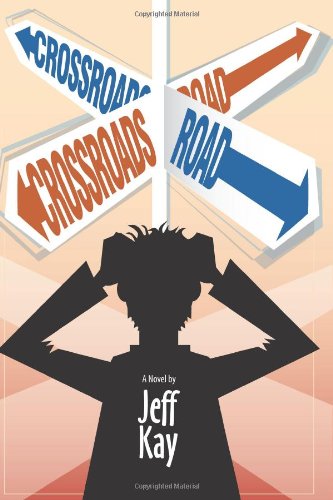
Review: Crossroads Road

Author: Jeff Kay
Genre: Fiction, Humor
Pages: 196
Warnings: Fat Hatred, Race and Gender Fail
Rating: 2.5/5

In the interest of full disclosure, I received this book from the LibraryThing Member Giveaway.

"Crossroads Road" is main character Jovis' account of a series of intentionally ridiculous events. Jovis' mother-in-law, whom he has lovingly dubbed "Sunshine", wins the lottery and several million dollars. She's willing to give her children and their families a large chunk of it (2 million dollars) so long as they agree to live on a cul-de-sac with her. All of her children agree and hijinks ensue.

I have to say it right away but this book didn't get funny for me until after the halfway mark. Kay seems to rely on two major sources of humor, and I only found the second method effective. The first half of the book is intended to be situational comedy regarding Jovis' outrageous in-laws. I can enjoy this style of humor based on my intense love of Terry Prachett's Discworld series, but Jovis' rubbed me the wrong way. To be fair, Jovis' in-laws do behave in some ridiculous ways, but most of the scene-building is punctuated by the narrator's internal monologue. Spoiler: Jovis is a raging asshole. I suspect most of the narrator's snide remarks about his family are supposed to be funny, but they just struck me as mean-spirited.

For clarification purposes, let me provide a slice of each family's specially-tailored funny attribute. Also Jovi is married to Tara.

Sue is Tara's sister, and married to Matt. Sue is fat. All the jokes about Sue, and Sue's family, ultimately fall back of the fact that she's overweight. She "fakes" her way into needing a scooter, she's needy for attention,  she requires a special toilet seat and her husband got tricked into marrying her when she was young and not-fat. I do not get why someone who is overweight can suddenly become the butt of every joke and the ultimate villian in every situation. Suffice to say: fat jokes do not hit the spot for me.

Nancy is also Tara's sister, and married to Kevin. Nancy and Kevin are academics, and therefore eat gross food, are never on time to anything, don't watch new TV and have weird sexual fetishes. I will admit that I did find some of the jokes about Nancy and Kevin a bit more funny, but again Jovis' tone just made me feel like an jerk for wanting to laugh.

Ben is Tara's brother, and Buddy is Tara's step-sister, and I don't remember them being the butt of too many jokes. I wonder if it's because they're men, and there just aren't enough noxious stereotypes to play off of? On that note, there is a woman named Carina who is the only non-white character and she is impossible to understand (because of the accent).

Luckily, the second half of the book was funny when you realized that Jovis, dear sweet Jovis, was the butt of all the jokes. I wasn't sure if I was supposed to be laughing with Jovis or at him, so it took a while for me to recognize that his mean-spirited remarks where supposed to illustrate what a giant douchebag Jovis was. While he's busy judging the other characters, they're busy judging him! That was when it started getting funny for me. Instead of viewing an event as a chance to laugh at Jovis' "crazy in-laws" I got to laugh at how his need to be the good guy kept making him snotty martyr. It is kind of fun watching an asshole dig their own grave. For that reason I loved the ending.

This book was just not as funny as I hoped it would be. I wasn't sure if I should be laughing at the main character's faux-witty remarks or how incredibly obnoxious he was being. When I finally settled down into mocking Jovis, I chuckled, but I didn't make me belly-laugh. Now the ending brought out a real laugh, but I don't think I should read 196 pages of build-up for one joke. If you really, really like fat jokes or if you like seeing assholes get what they deserve and you have a few hours you don't want back, this book is for you. If not, oh well.

And now, for some Terry Prachett!
People who are rather more than six feet tall and nearly as broad across the shoulders often have uneventful journeys. People jump out at them from behind rocks then say things like, "Oh. Sorry. I thought you were someone else."(source)
Comments and Questions Welcome~

Monday, May 16, 2011

Review: Naamah's Curse

Author: Jacqueline Carey
Genre: Alternate History Fiction
Pages: 537
Warnings: Sexual Harassment, Consensual sex between adults
Series: 7/8(?) in Kushiel's Legacy
Rating: 3.5/5

Jacqueline Carey's "Naamah's Curse" is a reminder that the first requirement of a good book is to be entertaining. It took me over a week to read "The Sword of Shannara", and I had almost nothing else to distract me. In contrast I breezed through "Naamah's Curse" in a day and a half. I won't say I couldn't put it down, but I didn't have to: this book is very easy reading. It picks up immediately after "Naamah's Kiss" with Moirin traveling through psuedo-China (Ch'in) as she chases after Bao.

If you've read the previous book this should come as no surprise, but Moirin is very sexual. She sleeps with almost every major character in the book. It would differentiate this from harlequin romance novels though, as the descriptions of sex aren't terribly explicit, where explicit includes more than flowery euphemisms for vulvae and penises. However if you're uncomfortable with causal sex between members of any gender, avoid this book. You will not enjoy the opinions expressed in this book regarding sexual relations. Luckily for me  I really appreciate her attitude towards sex, although I was not interested in "Kushiel's Dart".

Something that did leave me concerned was the portrayals of the psuedo -Chinese (Ch'in), -Mongolian (Tartar) and -Bhutanese (Bhodistanese). Warning bells start ringing in my head when a book is written in English about non-English-speaking cultures, even if they're dressed up with different names. Typically such portrayals are stilted, with characters that are presented as over-played caricatures (like Mr. Miyagi from the movie "The Karate Kid", which always makes me cringe). As part of the intended audience instead of the intended subject matter I'm not in a great position to judge how stereotyped the non-native characters are, but I'd welcome critical analysis of it.

The only borrowed culture I do know for sure was one-sided was that of the Russian (Vralians) Christians. I know Carey made a point of stating that the Vralians in the novel were from an intolerant sect of Eastern European Christians, but they were all uniformly incapable of having healthy sex lives. While I have personal qualms about the more extreme sects of Christianity's opinions about sex, I seriously doubt that even the most uptight families are as repressed as Aleski's, and they were the only Vralian family mentioned. More importantly, being prudish isn't the same thing as being hateful. In all of the other civilizations Moirin meets a wide swath of people, while in Vralia she only meets sexually repressed, unhealthy people.

If you'd like an easy to read story, with some mildly interesting characters and a plot, I would encourage you to read this book if it's readily available. I will probably read the conclusion to this trilogy, but I am unlikely to go back and read any of the previous books in the series. However if you're likely to have any disagreements with the philosophy espoused within (that sex is awesome, and can be shared between any two people who are attracted and care about each other) ... I'm sorry. Also you shouldn't read this book.

Questions and Comments Welcome~

Wednesday, May 11, 2011

Review: The Sword of Shannara


Author: Terry Brooks
Genre: Fiction/Fantasy
Pages: 726
Warnings: Death, some imagery of violence death, Tolkien-clone
Rating: 2.5/5

One of my friends suggested I look into Terry Brook's Shannara book series, but it took me no small amount of time to decide which book to start with. After a bit of research I gave up trying to be systematic and settled on "The Sword of Shannara". It's the first book in the series Terry Brooks wrote, although it takes place towards the end of the universe's chronology.

I swear, "The Sword of Shannara" is a clone of Tolkien's style, archetypes and plot. This goes beyond the basic similarities most high fantasy books share. Some of the similarities were positive, but Brooks also copied some of my least favorite aspects of the "Lord of the Rings" trilogy. The wholesale borrowing of major plot points is the most obvious.

The plot is as follows: A mysterious wizard druid arrives in the peaceful Shire Shady Vale and informs Frodo Shea that only he is qualified to destroy wield the legendary One Ring Sword of Shannara so it can't be used by the evil Sauron can be used to kill the Warlock Lord. He and a few close companions travel to an official meeting in Rivendell Culhaven, the home of the elves dwarves. Along the way they are harrowed by Ring Wraiths Skull Bearers. There the main characters band with a group of humans, elves and dwarves to quest for the ring sword. During their travels they shortcut through the cursed mines of Moria Hall of Kings. After a certain amount of running around which I can't be bothered to remember, the party gets split into at least two groups culmination of the story. The majority of the humans, elves and dwarves converge on the kingdom of Rohan Callahorn, where they must free the king from the evil influence of Wormtongue Stenmin. Then his people retreat to Helm's Deep Tyrsis, a highly fortified keep where they attempt to hold back the forces of evil. After a long and painful siege, the elven army comes to their rescue, and the army of Mordor the Skull Kingdom is defeated. At the same time the main character and his stalwart sidekick Samwise Panamon Creel travel to the heart of enemy territory with their guide Gollum Keltset to destroy the ring use the sword.  After a certain amount of soul-searching, their mission is accomplished, and everyone who's still alive goes home!

To be fair, I did simplify some points to emphasize their similarity and skipped over some of the more boring fight scenes in LotR. However with only mild embellishment most of the major plot points of "The Sword of Shannara" are a name-change away from those in "The Lord of the Rings". On the plus side, that meant the plot was solid, and could be described using words like "epic" and "legendary". On the down side, I've already read LotR. For anyone else who also just happens to have read Tolkien's trilogy, there will be zero sense of suspense generated by Brook's book. For instance, when the heroes traveled into the Hall of Kings, I already knew there was a terrifying monster lurking at the end. The surprise? It was a water-monster instead of a fire-monster! There is very little different material, so I'll try to avoid revealing any more of it.

I can't fault Brooks for using the same species list as Tolkien, since almost every high fantasy writer draws from said list. I believe there are good fantasy books that feature species aside from Elves, Dwarves, Trolls and Gnomes out there. I do! Brandon Sanderson, back me up here.

Another characteristic of Tolkien's that I would have preferred Brooks left alone was his overly wordy prose. It took me almost a year to finish "The Two Towers", because I just lost the motivation to read it three times and didn't come back to it for months. Brook's first book is a little better, but I found myself skipping over huge chunks of descriptive paragraphs to get to dialogue. My interest in hearing more about some of the characters who diverge from Tolkien's template warred with my disinterest in his prose. The result was that I finished this book, but I didn't like it all that much. I don't want to read any more novels written by Brooks unless I can get some assurance he stopped trying to be Tolkien.

Some of the areas I thought Brooks shined as an author was when he left Tolkien alone. I enjoyed all of the new characters Brooks created, like Panamon Creel, and Menion Leah. I thought they were most interesting personalities because they didn't have analogues to Tolkien's characters and because Brooks spent more time fleshing them out. I also liked that "The Sword of Shannara" is set on a post-nuclear-apocalypse Earth, which was a relatively new story idea in 1967.

If you liked Tolkien, you'll like Terry Brooks. You'll definitively like "The Sword of Shannara" for all the same reasons "The Lord of the Rings" tickled your fancy. Enjoy rich fantasy worlds, with an author who dreamed up a timeline lasting thousands of years before or after the book you're reading? Like the reassuringly familiar structure of high fantasy, the straightforwardness of Good versus Evil in Black Cloaks? Have a crush on elves? Good, you should read this when you have some free time. If you've already read LotR and you don't want to read it again, stay away from this. Go read some science fiction, for goodness sake.

Questions, Comments and Kvetching Welcome~

Thursday, May 5, 2011

Review: Heirs of Mars Preludes

Author: Joseph Robert Lewis
Genre: Science Fiction
Pages: 28
Warnings: Gynoids!
Rating: 3.5/5

In the interest of full disclosure, I received a copy of this book through the  LibraryThing Member Giveaway. Thanks!

So, this is a set of three short stories that all take place prior to "Heirs of Mars". Adorably, their names correspond roughly to the setting of each story, and create a nice triumvirate (Heaven, Earth, Hell). Be warned though, these stories are quite short, I blew through them in one sitting.

The first story, "To Reign in Heaven", is set in the space around Venus, where the infamous Mother has recently come into sentience and is sending her Cartesian children packing for Mars. The bulk of the story centers around India, a gynoid left behind inside the weather satellite that is Mother. India was my favorite character of the anthology actually; she's got immense strength of character and painfully human emotions to back it up. I don't want to reveal too much of the plot, but this story certainly suggested there could be an official sequel to "Heirs of Mars".

"To Walk the Earth" was another snapshot, this time of Victoria, the woman who refused to go to Mars with Asher. Victoria was a strong character as well, but strong to the point of being inflexible, a flaw I can appreciate if not enjoy reading about. The premise was classic sci-fi, about Victoria and Asher questioning humanity's current dependence on media for stimulation. The ending didn't sit too well with me because I thought it was a little over the top.

I enjoyed "To Serve in Hell" the most, because it showcased Lewis' ability to present two opposing viewpoints of the same event realistically. It is from the perspective of the farmers who beat up Asher in the beginning of "Heirs of Mars", who I originally had no sympathy for. Their ringleader's name is Neil, by the way. Experiencing Neil's point of view was painful and illuminating. My conclusion is that Neil is still a dick, but I can sympathize with what drove him to be that person.

There are two ways to evaluate "Heirs of Mars: Preludes": as a stand-alone anthology and as an expansion of the original novel. I enjoyed the set of short stories as an expansion because I wanted to hear more about the characters. Naturally anyone who liked "Heirs of Mars" will enjoy these stories as well. However I do think it's possible for someone to enjoy them without having read the novel. Lewis does make a point of developing India, Victoria and Neil enough that they can breathe without the life support of the original book, although I don't think they'd be as rewarding a read.

Comments and Questions Welcome~

Sunday, April 10, 2011

Review: Machine of Death

Author: Various
Genre: Fiction Anthology
Pages: 439
Warnings: Lots of Death
Rating: 4/5

"Machine of Death" is a fiction anthology in a universe where there is a machine that can predict the exact cause of an individual's death. Every short story comes starts an illustration. I haven't enjoyed such a high image/word ratio since I was in elementary school, but this anthology is the exception which changes the rule. As far as the content goes: sometimes the Machine was required for the storyline but usually it was part of the background of the story.

I was surprised by the huge variation in the quality of the stories in the anthology. Most of them were fun. I would say I really loved maybe five, and I completely skipped two. There's something very liberating about starting a story, realizing you're already counting the pages to see how many are left, and deciding to screw it. There are enough stories that's it's worth sitting down to enjoy only the ones you want to. And no matter what your fancy, I predict you'll find enough stories likable to make it worth purchasing the book.

Plus, because I love the internet, I want to point out the idea for the "Machine of Death" was conceived at Dinosaur Comics! I appreciate that the anthology pays tribute to it's origins by placing the comic on the second page. It's adorable, so you should follow the link and see for yourself.

I was also surprised to see some of my favorite online personalities contributing. Kate Beaton of  Hark a Vagrant (who draws the most adorable web-comics in the history of the internet) was an art contributor so I was delighted before even starting the story. Ben "Yatzee" Croshaw also wrote a story, which was unexpected. I know his cutting wit from the Escapist where he reviews video games, but his story is devoid of cock-related jokes. The entire work is an exciting collaboration of young artists and authors who make the internet worthwhile.

I don't read anthologies a lot, so I'll review four of my favorites and touch on four of my least favorites. The summaries will be borrowed from the official website.

Flaming Marshmellow
Author: Camille Alexa
Summary: This story of high school cliques was funny and genuine, with a great, punchy ending.
Rating: 4.5/5
I was surprised by how much this short affected me. "Flaming Marshmellow" was a disturbingly accurate illustration of a teenager just beginning her life by receiving a slip of paper that tells her how she'll die. I took an immediate liking to the main character, and to her father, who shows up to drive her to the MoD. The ending made me cry and laugh at the same time.

Torn Apart and Devoured by Lions
Author: J. Channing Wells
Summary: Hands down the funniest story we read, this one also had a great take on the insurance implications of the Machine.
Rating: 5/5
I think I giggled the entire way through this one, just like the summary said. Not just because the main character has a healthy sense of humor (and irony?) but because it's great to imagine a world where finding out how you're going to die makes you happy. Who would have though "Torn Apart and Devoured by Lions" would be the most exciting part of your life?

Aneurysm
Author: Alexander Danner
Summary: A pitch-perfect story about a magician who hates insipid party games.
Rating: 4.5/5
Another humorous story: I'm sensing a pattern here. Unlike "Devoured" this one is all about the punchline. I mean, yes it's entertaining to read before that, but the last bit really makes this story. If you don't like it, don't worry. Most of these stories are hardly more than 20 pages.

Prison Knife Fight
Author: Shaenon K. Garrity
Summary: The worst fate for a child born into privilege? Perhaps, but a delightful story for the rest of us.
Rating: 5/5
I usually have very little sympathy for characters who are too "well off". That just sounds ridiculous to me, like they're complaining about how being able to eat ice cream whenever they want destroyed their love for the food because it wasn't a treat anymore. Boo hoo. "Prison Knife Fight" made room in my cold heart for children of the wealthy. I'll never pity Cotton (the main character) but I can respect his loneliness.

Love
Author: Kit Yona
Summary: [The] story of a young couple forever(?) in love.
Rating: 2/5
Erk. Even I can tell that the main character's going to have trouble in his relationship. Even though he's supposedly "in love"  his description of his girlfriend sounds more like an advert for a porn-bot than a person. Wow, she's blond, hot, loves to wear the naugh-tay lingerie you buy her and go shopping. I mean, yes, there are women who have those characteristics but only if you cut out lots of other interesting bits.

Exploded
Author: Tom Francis
Summary: This story about the accidental inventors of the machine felt brutal, desperate, and real.
Rating: 0/5
I don't know why this story rubbed me the wrong way. Part of it's probably the reductive description of the main character's girlfriend (again). Maybe it was the choppy storytelling. Either way, I didn't make it through this story, so I don't have anything else to complain about.

Murder
Author: Randall Munroe
Summary: What happens when physical science rejects the idea of precognition?
Rating: 0/5
I don't like westerns. This story wanted to cast John Wayne for the main character so bad it made me cry a little. Or Bruce Willis. Either way, this story screamed Manly, or Rugged. I only made it two pages in.