Showing posts with label non-fiction. Show all posts

Tuesday, August 9, 2016

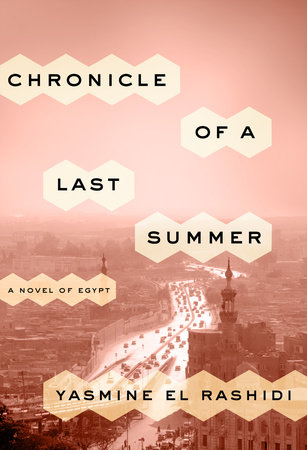
Librarything Giveaway Review: Chronicle of a Last Summer

Author: Yasmine El Rashidi
Genre: Memoir
Pagecount: 232 (epub)
Warning: Death, References to torture, imprisonment, suicide
Rating: 4.5/5

"Chronicle of a Last Summer" records the impressions of the narrator during three pivotal summers in Egypt, 1984 when she is eight years old, 1998 and 2014. The prose captures the fundamental feelings and limits to her expression (especially at eight) without being painful to read. More importantly Rashidi expertly illustrates the interlaced emotional journey of the narrator as her opinions about what loyalty, country and home juxtaposed with a culture that values stability above most everything else.

I loved this book. The language was easy to read, but I think I'll be grappling with it's meaning for years to come. It's a beautiful look into a world I'd never seen before. I encourage you to check it out!

Wednesday, November 30, 2011

Review: Guns, Germs and Steel

Author: Jared Diamond
Genre: Non-fiction
Warnings: Nothing really
Pages: 512
Rating: 3.5/5

Wow, there is so much that is worthwhile in this book! Holy crap, there is just a LOT of information in this book! It covers several observed general trends in the development of human civilization across the majority of genetically modern human history. And when I say the majority, I mean before roughly the 1800's back to the first time humanity became genetically similar to us. It's inclusive, extensive and just detailed in every respect. Diamond's goal is to treat history more like a hard science by framing architectural evidence as uncontrolled experiments that can be used in conjuncture to identify independent variables, which is an admirable goal and resulted in a sweet book as far as I can tell.

More than just marking the trends of civilization from less to more complex hierarchies, this weighty-ass tome attempts to explain some of the many interrelated reasons why civilizations develop at different rates. Diamond identifies technology that resulted in one state dominating another multiple times in the archaeological record, and then creates a plausible chain of reasoning that connects them to the attributes of each state's locality. An example would be illustrating that the vast differences in sophistication between the tools in Europe and the Americas during the 1400's are a result in the disparities of domestic-able plants and animals on the two continents. I can not tell you how much I appreciate this attention to detail, and how valuable the documentation of Diamond's thought process is to me. I also think this book represents an important shift in what history means and I felt my world was enlarged by reading it.

One important warning to any potential readers: this book is really boring. The prose reads a lot like a textbook, and it makes this book difficult to get through. It's size and it's dryness it is a real deterrent to anyone outside of academia. However I cannot state strongly enough that if you're interested in the subject matter, you should check it out anyway. Just... remember to pick it back up after you've put it down.

Associated Website
http://www.pbs.org/gunsgermssteel/

Similar Books and Authors
"The Black Swan" by Nassim Nicholas Taleb
"A Short History of Nearly Everything" by Bill Bryson

Saturday, October 15, 2011

Review and Recommendation: Delusions of Gender

Author: Cordelia Fine
Genre: Non-fiction
Pages: 338
Warnings: Eh
Rating: 5/5

I can not recommend this book highly enough. This was one of the coolest books I have ever read. I wish everyone would read it! There's a wealth of information how we think that I find fascinating. Some of the theories suggested are a bit scary, and some feel like a missing piece of a puzzle falling into place. Beyond the arresting subject matter, I appreciated Cordelia Fine's excellent writing style and the sense of purpose it gives her book. This book is personally appealing to me, but I believe everyone could take advantage of it's demand to see gender as a much more flexible concept than our parents led us to believe.

First and foremost, as I said above, awesome information. I spent no small amount of time after reading this book  actually following the footnotes to studies. I'm not going to pretend I read them all, but I was emboldened to critically consider the methods used to collect data in popularization, even those that Fine referenced. I am also more aware of those really irritating assumptions about an entire gender's mental capacity. I really hate those. If I heard someone say that all Asian people are worse at math than white people, I sure and heck wouldn't just accept that.

Fine's writing style was also just what I wanted. Her prose is witty, interesting and her conclusions are unabashed. All of her theories are backed up with a chain of evidence presented in reasonable journal articles, but she takes time to pepper her prose with anecdotal evidence. These asides keep "Delusions of Gender" from being a dry textbook and make the ideas Fine endorses (that ladies aren't inherently empathetic to everyone, stupid or more irrational than anyone else) more accessible. After all, we're not talking about ancient history or hypothetical people. This book posits theories about people right now, about culture as you know it.

So, if you're a feminist, or if you don't call yourself that but get frustrated when someone suggests women are "just bad at math" read this book. You'll love it. If you may have said women are just naturally bad at math, but when asked why realize your only answer is "because", check out this book. You might like it.

Wednesday, June 29, 2011

Review: The Immortal Life if Henrietta Lacks

Author: Rebecca Skloot
Genre: Historical Non-Fiction
Pages: 362
Warnings: References to Tuskegee and other racial injustices, e.g. Jim Crow south, freaky descriptions of early radiation treatment
Rating: 4.5/5

Usually I read fiction (fantasy or science fiction or whatever) because I need a compelling story-line to keep me engaged. For me, it isn't enough for an author to have great skill at crafting sentences, their books also need a reasonably cool plot. I completely understand why the books of non-fiction writers are never judged based on how well they make a tale hang together, but there it is. I'm pleased to say that "The Immortal Life of Henrietta Lacks" delivers on all fronts. This book was a fantastic read by any way I measure it.

While the narrative Skloot writes about are anything but simple, her style of writing is easy to follow and her structure flows well. For clarity's sake, the year in which the majority of the chapter's action takes place is labeled at the beginning of the chapter. The first plot-line follows Henrietta Lacks herself, a woman born in 1920 and who died of a vicious strain of cervical cancer in 1951 (source). The second is about how Rebecca Skloot approaches and gradually wins the trust of Deborah, Mrs. Lacks' youngest daughter (in the early 2000's). The third story is a more clinical view of the history of consent in medicine (which sounds slightly textbook-y because it is), which converges on the HeLa case and branches off in some notable directions.

I hate to divulge too much of the book if it will stop anyone from reading it on their own time, but I want to state there are some admirable qualities to Skloot's narratives beyond being compelling as heck. Early on, Skloot makes it clear that she is a white woman telling the story of a black family. She doesn't avoid the fact that her being a white women that has her coming from a completely different, privileged world. As another white person, I can't make any definitive statements about how Skloot portrays Mrs. Lacks and her family; however I believe she is trying to be a respectful ally. That means Skloot presents the details of Mrs. Lack's life as accurately as possible, without malice or judgement. It means that she portrays the hurdles she has to leap to gain even the tiniest bit of trust trust from the Lacks family as  reasonable road blocks the family has created after numerous people have tried to take advantage of them (which is what they are).

On the other side of the immensely personal retelling of Mrs. Lacks life and death is a small-scale retelling of how medical science used and misused Mrs. Lacks' cells, code named HeLa. There is a brief overview of other cases that share similarities with Mrs. Lacks'. You see, medical science has no small history of experimentation on minorities, and of taking and using remarkable tissue samples without asking. HeLa was probably the most fascinating example of how patient's and doctor's best interests can diverge. No matter how I look at it, I feel like Mrs. Lacks was treated to a grave injustice, as was her family.

I think this book is the complete package. Skloot is descriptive without being wordy, her writing juggles several intertwining story-lines without getting confusing and she has a knack for getting her readers emotionally invested. It was a lot more focus on a good, evocative story than I was expecting from a non-fiction book, so if you would prefer facts over feelings, this book might not be worth it to you. If you're traditionally a fiction reader like myself, this is a great way to get into absolutely wonderful non-fiction, where I realized stories can mean more when they're real. More than that, this book started me asking questions about how the legal relationship between medical professionals and patients should look. I don't know the answers, but those are questions worth asking. One warning: I'm not sure if this will affect anyone else quite as strongly, but the descriptions of early radiation treatment for cervical cancer freaked me out!

Questions and Comments Welcome~

Saturday, April 30, 2011

Review: Look for Our Mother and Our Father

Author: Anonymous
Genre: Spiritual
Pages: 237
Warning: Fiction
Rating: 1/5

In the interest of full disclosure, I received this book through the Librarything Member Giveaway.

"Look for Our Mother and Our Father" is a series of related essays about how European-centric culture is all that is wrong with the world. Most of the author's criticisms are directed specifically towards the United States of America, but a certain about of blame for the state of the universe is laid on it's European predecessors.

First and foremost, I found the writing style to be consistent but jarring. The extensive use of parentheses was distracting. It was not uncommon for there to be several sentences in parentheses on a single page, which doesn't lend itself to coherent essays. There is little logical connection or narrative flow between paragraphs, and it took me a long time to distinguish the point the author was driving at. The style and organizational structure are very similar to preaching. This is effective when the author is trying to evoke emotional responses, but I confess my own responses were primarily negative.

Despite this there were some passages that I resonated with me, and my understanding of truth. For instance, there was a portion of a paragraph that explains how the American/European viewpoint towards animals is barbaric. This is illustrated in part by the historical slaughter of the plains bison in the 19th century. If you don't know what I'm talking about, American settlers killed bison to the point of extinction, ostensibly for their skins. This hunting was subsidized by the railroad industry to starve plains tribes. While I was not personally responsible for this event, I feel great shame to be part of a country that felt this was an appropriate response, and for all the benefits I have received since being born that are a result of the subjugation and destruction of the Native American Nations. Throughout the essays there are several more current examples of wrong-doing perpetrated by America which I also think all of it's citizens should recognize.

On the other hand, there are some things I just blatantly disagree with, like "Gravity and other natural laws are culture-specific phenomena, just like human nature; they are not universal laws."(pg 36) I cannot agree that gravity is a cultural construct, there is nothing that supports this.

The following passage was one that I found particularly frustrating, which illustrates a concerning trend in the logical premise of "Look for Our Mother Our Father". It suggests that only European-ish cultures are the only ones to use irrigation. For clarification purposes PEOC stands for "Person of European-Originated Culture"(pg 8).
PEOC's, on the other hand, would like to control everything and every part of the environment. To control water, we use concrete canals, dams, pipes, and faucets. Instead of letting water flow freely, as it used to move through the world, we try to capture it and direct it's course. The natural water features which used to grace the harshest deserts have all but vanished in PEOC countries (and countries we are forcing to develop). (pg 149)
Awkwardly, many South American civilizations used irritation. The Chimu Empire, which was in power from roughly 800 to 1470 AD, built a canal between the Chicama and Moche valleys to artificially boost the amount of water which would reach their capital city of Chan Chan. While I would agree that Americans have done all of the things referenced in the quote, and we alter the landscape to do so, the author's assertion that this controlling nature is a direct result of having a European-derivative culture is factually untrue. It also suggests the author has made some broad generalizations about human nature that zhe can't back up.

I suspect that some of the authors's assertions arise from a Noble Savage complex. It is possible that the author has chosen to generalize about all Native American cultures in order to preserve the anonymity of the tribes zhe knows intimately about, to which I applaud zhe's respect. However the sheer number of sweeping statements in the text about Native American lifestyle makes this unlikely. The majority of the author's statements about Native American culture are broad generalizations, which suggests zhe knows very little about the individual tribes. Zhe also fails to specify any tribe, although there were many different Native American cultures that existed across time and geography. It seems improbable that every Native American tribe exhibited all of the characteristics the author ascribes to them. My favorite example of the ridiculousness of the author's claims is "If it doesn't break down and need replacement, it needs maintenance. Everything needs maintenance: buildings, roads, landscaping ..."(pg 127) I can only think of two interpretations of this statement: a complaint about everything, or an implication that Native Americans are better because nothing they built has ever needed repairs. Ever. I make this point because if I'm correct and the author is placing Native American culture on a pretty inhuman pedestal, without bothering to learn anything about the cultures zhe claims to revere.

I believe the author's fundamental argument is untrue. European-centric cultures commit wrongful acts, but this has less to do with some inherent flaw in only European-centric cultures than with a basic flaw in powerful agrarian societies. The author constructs Native American culture as the opposite, and in doing so ignores their complexity and humanity. The author just generally has an inability to tell reasonable critiques of agrarian societies from nonsense. While I am aware, at it's heart, the argument that American society has problems is true, "Look for Our Mother Our Father" is a terrible critique of it. This book is little more than one disappointed individual complaining about their lives, and indiscriminately laying blame.

I struggled through 162 pages of this book, but now I'm just happy I've given up on it. It's a lovely day outside, and I'd much rather enjoy that.

Questions or Comments Welcome~