Tuesday, August 9, 2016

Librarything Giveaway Review: Chronicle of a Last Summer

Author: Yasmine El Rashidi
Genre: Memoir
Pagecount: 232 (epub)
Warning: Death, References to torture, imprisonment, suicide
Rating: 4.5/5

"Chronicle of a Last Summer" records the impressions of the narrator during three pivotal summers in Egypt, 1984 when she is eight years old, 1998 and 2014. The prose captures the fundamental feelings and limits to her expression (especially at eight) without being painful to read. More importantly Rashidi expertly illustrates the interlaced emotional journey of the narrator as her opinions about what loyalty, country and home juxtaposed with a culture that values stability above most everything else.

I loved this book. The language was easy to read, but I think I'll be grappling with it's meaning for years to come. It's a beautiful look into a world I'd never seen before. I encourage you to check it out!

Sunday, July 31, 2016

Librarything Member Giveaway: Chaos Season


Author: Sandra Ulbrich Almazan
Genre: Fantasy, YA
Pagecount: 232
Warning: Parental Abuse, Transphobia, Homophobia, Bad Flirting
Rating: 2/5

This is a continuation of the story featuring the newest incarnation of the avatars of the seasonal gods and their never-ending quest to counter the devastating Chaos Seasons and protect the land of Challen. I hadn't read the previous books in the series but this one picks up after the next avatars had struggled to find each other and were now finally able to get down to the momentous task of taking over as Season Avatars from their predecessors, this time with a time traveler who remembers the villain who created the Chaos Season from personal experience.

I want to say I thought this was an okay book story-wise, but I would not recommend it. My opinion isn't because of the premise, which as listed above is appropriately epic. It's not so much because of the characterization of the four main characters and their interactions, which was reasonably good, especially considering I had missed at least one book of backstory. It wasn't even because of the main character, who I could not find a way to like. I will admit to finding the iterations between men and women incredibly hard to follow, but that is unrelated to the majority of my rant.

Reading this book was like pulling fucking teeth for me because of the gender and sex politics implicit throughout it. The book was set in a Victorian Era analog with magic, but the politics were kind of a mash-up of then and some of the crappiest stuff from modern times. I could not handle
that there was very little evidence of overt discrimination, but all of the society was still clearly structured in an extremely sexist, homophobic way. More than that, the existence of trans people was just disappeared. It felt like the worst example of political correctness, like if maybe we didn't talk about bad things happening they don't count.

Rant to follow below the break.


Thursday, June 30, 2016

Librarything Member Giveaway: A Natural History of Hell

Author: Jeffrey Ford
Genre: Horror, Supernatural
Pagecount: 281 (ebook)
Warnings: Death, Murder, Violence, Rape, Dismemberment, Domestic Violence, Dolls, Spooky shit, Kitchen Sink
Rating: 4/5

"A Natural History of Hell" is a collection of short stories that span a remarkable range in location, time period, genre and atmosphere. They all have a supernatural theme, but I was genuinely impressed and how wide and varied the flavor of stories spanned. The only consistency is the austere language. The prose was clearly written and easy to read, even when the events of a particular story were on the edge of what I could handle. This kept what could have been wildly divergent moods from giving me emotional whiplash (in other words, I liked it).

This lovely collection of stories are clearly the culmination of many skillful experiments into a multitude of literary traditions that were pleasurable to read with nary a dull moment.

Since I have very little that can be said about the entire collection together aside from how widespread it is, the meat of this review are short opinions on the individual tales.

The Blameless: A surprisingly sweet story of a married couple attending a coming of age ceremony for their neighbor's daughter, specifically her exorcism. An okay short, but interesting to me largely as an example of gendered emotional labor.

Word Doll: Creepy in the way only dolls can be, made of words or otherwise. Reminded me of the midwestern folk horror that the TV show Supernatural does so well. Perhaps my favorite story of the collection.

The Angel Seems: Some truly weird supernatural events, kidnappings, extremely creative deaths and a plethora of (presumed) good old fashioned rape. I have very mixed feelings about this story, because so many ladies get raped that it becomes mundane (that's gross as fuck), but the ending is by far the best ending any story can have. Mixed!

Mount Cherry Galore: This is a coming of age story with some more magical elements included than usual. I admit this one was nice but didn't stand out for me.

A Natural History of Autumn: A young yakuza meets a hostess and has a very trying adventure in the mountains. It was a nice surprise to see a local folk horror story from a completely different tradition. I think my only point of comparison for this was Kwaidan so I can't tell you how faithful it was to Japanese horror, but I definitely had fun reading it.

Blood Drive: By far the scariest story for me, since this year it hits a little too close to home. Think of this as the Handmaiden's Tale but for the NRA instead of evangelical christians.

A Terror: In April of 1862 Emily Dickinson wrote a letter to a friend in which she said "I had a terror since September...". Ford imagines what she experienced. I liked this story because it diverged in tone from the other stories; in deference to Dickinson it was more fantastical and lyrical, which was delightful.

Rocket Ship to Hell: One author relates the strange tale of his trip into space to two of his fellows in a dimly lit bar. This one is a call-back to golden age sci-fi, with all of it's bad science, shady old men and sexism. Hard pass for me.

A Fairy Enterprise: A Victorian entrepreneur hits on a new business venture, and it doesn't go at all to plan. This was a nice palette cleanser for me, a pleasing mix of English fairy tales and Charles Dickens.

The Last Triangle: A down on his luck drifter is welcomed into the life of an older woman with some very dangerous secrets. Another nice story, a little like the John Constantine comics in that all of the characters are both flawed and magical.

Spirits of Salt: A Tale of the Coral Heart: The tale of a man with a legendary sword and the badass women in his life. I wish I knew what literary tradition this story was from. I'm leaning towards far east, maybe India, but I couldn't say for sure. I liked the way the story was told, and the main characters were all super cool. I would love to read more like it!

The Thyme Fiend: After a young man discovers a body in a well, he can't stop seeing the ghost of Jimmy Tooth unless he drinks thyme tea. There were some very dreamlike aspects to this story and I couldn't help falling into them. I found it deeply engaging, would recommend.

The Prelate's Commission: A talented young artist is commissioned by the local prelate to paint a true picture of the devil. While I usually delight in religious iconography, this was one missed the mark. I got the impression it could have been fleshed out into a full length novel, since this version was a bit rushed.
Monday, June 13, 2016

Librarything Member Giveaway: Eye of the North Wind

Author: B. Y. Yan
Genre: (High) Fantasy
Pagecount: 391
Warnings: Quality Snark, Mutilation, Death
Rating: 3.5/5

"Eye of the North Wind" is the story of several entertaining characters living in the land of Immortal Linberry. You start off following Sir Boors, the steward of the kingdom, who seems to stumble from one scheme to the next while always just barely keeping his head above water. However the bulk of the action takes place while you follow Sangor, a canny sword-for-hire  past his prime who is making his last attempt to enter the elite Yulin Hundred by going on a quest of great import.

Perhaps the most important thing to remember about this novel is that it's broken into two pieces stylistically. The first portion, in which Sir Boors is the primary character, is about the surprisingly competent administrator, despite him being outwitted by several other characters. He is a charming combination of weaknesses to bribes, pomp and an unapologetic acceptance of his limitations. I didn't laugh out loud while reading this portion of the book, but I alternated between a grin and a smirk almost the entire time, a little like "A Confederacy of Dunces".

The second portion followed Sangor, wherein we made the transition from moderately sardonic social commentary on bureaucracy to a fairly standard medieval romance. Which means, of course, that there is a Quest, a Fair Maid and no small amount of Villainy to Defeat. This section I also enjoyed as its own story, because does a good job hitting the traditional elements for medieval romance classics. Again I found myself amused by the schemes of the nominal hero of our story, and how well Sangor managed to keep said hero from getting his butt kicked.

My gripe with this book is not when but how the transition between styles happens. I was settling down to a pleasing book within the city of Immortal Linberry when suddenly I found the novel following a different character introduced in passing while Sir Boors was in charge. It wasn't jarring so much as I was sent a little adrift while the switch happened, which took some time to recover from. In addition some of the characters that wind up being very important are thrown in at the end when they could have been introduced more fully into the Boors-led introductory portion.

Overall I liked this story, but I'm sure it's for everyone. I loved that Yan skillfully tells a story and lets his readers in on the joke; that is, the absurdity of medieval romances. He clearly loves these types of stories but also knows how silly they look from the outside. However not everyone likes this deliciously tongue-in-cheek tone, and the less skillful combination of genres will frustrate some readers.

Saturday, May 14, 2016

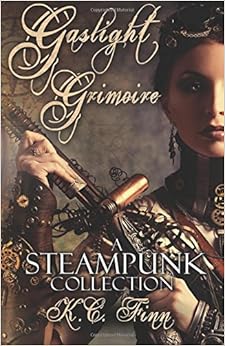
Librarything Member Giveaway Review: Gaslight Grimoire

Author: K. C. Finn
Genre: Steampunk
Pagecount: 176
Warnings: Death, Enslavement, Violence, Racism, Sexism
Rating: 3/5

"Gaslight Grimoire" by K.C. Finn is a collection of short stories that effortlessly combine elements of steampunk and dark fantasy in a wide variety of settings and circumstances throughout the late 19th century. The premise of each story is unique while maintaining a misty, clanking atmosphere.

There are a total of twelve stories, and while I enjoyed all of them, there were two that stood out as my favorites, "Master Mind" and "Mira and the Maw". The thread that links them is what links almost all of these stories: a fantastic premise and a good atmosphere. "Master Mind" is centered around a historical machine called the Turk, with an ending that I refuse to ruin but fit perfectly. "Mira and the Maw" on the other hand centers around Mira, a 'steampunk zombie hunter' as referenced in the foreword, who is basically Girl Genius (and also an actual girl genius). It's one of the slower builds in the collection, which gives us time to look past the flashy aspects of the story and take in the characters, so when the tale concludes you're invested in Mira surviving and possibly outshining Buffy.

As far as a general opinion of the collection I'm of two minds. As I said, I think the strongest aspect of the anthology is it's atmosphere. All of the stories have a similar feel, which does a great job using the outlandish premises and varied locales of steampunk and combining them with the equally fantastic premises and bleak morality of dark fantasy. It can be a bit much for someone who doesn't like one of these genres a great deal, but if you're willing to go along on some truly weird adventures it's a wonderful read. Settle down on a rainy day and gobble these twisted fairy tails up!

However be warned, the characterization in these stories is definitely a weaker aspect. I liked a few characters, like Mira from "Mira and the Maw" and Galileo from "Galileo's Mistake", but during most stories I wasn't attached to anyone. That's hardly surprising, it's damned difficult to get invested in a character when you have maybe 10 pages with total. In any individual short story I don't mind that much either, as they don't last long. But for me it was a consistent problem, that when I peered behind the flashy scenes I found... one dimensional people.

Now for the a more general nit-pick: I try not to do this with every book because it's exhausting, but while I was reading I started noticing the cast list was a looking a bit sausage-y. How sausage-y you ask? By my count 23% of the narrators and 25% of the speaking characters are women, which can't be good for a species that pair-bonds. In addition about 10% of the speaking characters are POC, which would be reasonable for the UK in 1900, but not for 2016. I don't mean to notice it, but once I know a book's cast skews that white and dudely for no reason it takes away from my enjoyment of a book a bit. I start wondering what happened to Victorian steampunk world that they have such a shortage of women. How will the human race repopulate? Why is no one talking about the obvious racial apocalypse? And if this was just oversight on the author's part, why are fairies and steam-powered hearts okay but altering the racial and gender politics of the 1900's isn't?

Sunday, May 8, 2016

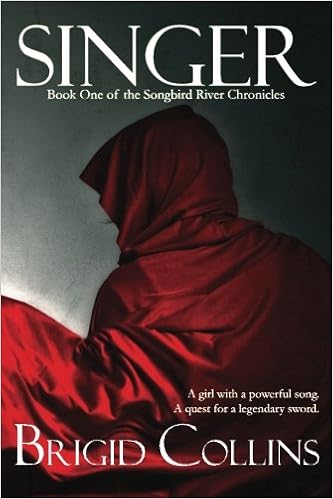
Librarything Member Giveaway Review: Singer

Author: Brigid Collins
Genre: Fantasy/Sci-fi/YA
Pagecount: 204
Warnings: Death
Rating: 4/5

I'm so pleased with how this story came together, especially the last third of the book!

"Singer" by Brigid Collins starts out as the adventure of the eponymous character, a woman who would be mute if she couldn't sing the most beautiful wordless melodies. Singer teams up with a ragtag group of adventurers on their way to plunder the mysterious depths of the bluntly named "Nameless City", to which she is inexplicably drawn. As they travel through a place so old that everyone who has ever lived there is dead with their bones turned to dust, it becomes clear it's every bit as dangerous as predicted. And the storytelling and imagery remains excellent right up to the finale.

Admittedly the action starts slowly, and during the first few chapters I didn't quite know why I kept reading. However it was easy prose, well worth continuing, as my empathy towards the characters grew organically as a result of the pacing. By the time the threats start showing up deep inside the Nameless City you're invested in everybody, so I would say the pacing works out well enough. Besides which I want to give credit where credit is due and recognize that the monsters were fuck-off scary and I feared for character's lives, so good job there. I'm hesitant to spoil anything, so it the most vague terms I'll say my personal experience as a computer programmer was irked by a plot point. It was bad, but it wasn't "Hackers" bad.

Ah, seriously. All you really need to know is that Collins spun a good tale. You know how sometimes, after reading a book, you just sit back with a sigh of contentment and think "that went exactly how it should have gone"? Fairy tales in particular often end with the reader content that all the foreshadowed events happened and all the seemingly disparate threads have been tied together? That's how this book left me, and I loved it.

Actually I was a little panicked as I neared the end; I firmly believe Singer's world should be way better explored, but I hear there is a sequel, so that solves that!

Tuesday, April 5, 2016

Request for stories with non-binary gender or sex

I have a request! I read primarily fantasy and science fiction with a strong preference for speculative works, and I'm regularly frustrated by the paucity of diversity in gender and sex representation. It's a little nonsensical, since both are already complicated for humans and other animals. It's especially irksome when you consider fiction often restructures social and physical norms, sometimes wildly. How is it authors can imagine entire economies based around dragon flight but not women who don't like cooking and dresses? Or a more complex set of sexes than the two-sizes-fits-all model to which most stories default? Okay, slight exaggeration, but seriously, how are dragons more plausible than a different set of clothing division?

I admit this is more rant than request so far, so let me take a moment to try and flesh put what I'm looking for; book recommendations that include non-binary genders or sexes. Examples would be a culture or species that has more (or less) than two distinct sexes that are male/female, or gender roles that vary wildly from "boys like math, girls like feelings" stuff. I would enjoy books that focus on this, but I'm primarily looking for stories where this is just part of the world.

For reference, the following media are the sort of thing I'm looking for:
Lilith's Brood by Octavia E. Butler
The Imperial Radch trilogy by Ann Leckie
The Worldbreaker Saga by Kameron Hurley
Knights Errant by Jenn Doyle (webcomic)
The Left Hand of Darkness by Ursula K. Le Guin
Ethan of Athos by Lois McMaster Bujold (I would count the men of Athos as being a non-traditional society in terms of gender)

Plesse, let me know what you've seen! I know this is oddly specific, but it's become a pet peeve of mine after noticing speculative fiction stories always default to the traditional, reductive binary for sex and gender. I think it would be nice to read novels with an understanding that things are more complicated than that, and especially an exploration of how complex they could be.

(crossposted at Librarything)

Monday, March 28, 2016

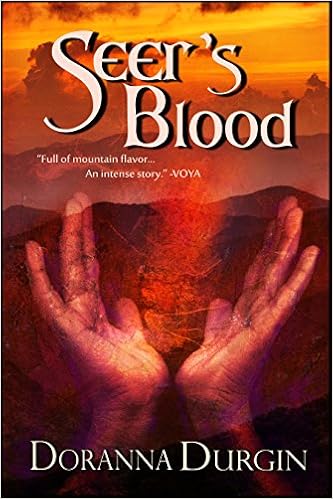
LibraryThing Review: Seer's Blood


Author: Doranna Durgin
Genre: YA
Pages: 310
Warnings: Death, torture
Rating: 3/5

Doranna Durgin's novel "Seer's Blood" follows feisty mountaineering outcast Blaine who follows enigmatic newcomer Dacey on a daring coming of age journey to save her family and her home. Blaine has been haunted by troubling dreams when she sees a large group of strangers camping out near her family's homestead. Not too long after a curious man, Dacey, brings warning of an ancient enemy. Blaine, armed with the incomplete knowledge of the long-lost seers, eventually allies with Dacey and his frankly awesome dogs, they learn, grow, rally their strength and lead an epic ass-kicking charge.

I wanted to love this book, I really did. It had a shadowy, possibly novel magic system, a straight up awesome villain, a solid heroine and a good dynamic between the two main characters. It had dogs, written well! So much potential, and instead of doing anything revolutionary Durgin meandered through the plot. Which is to say the climax was well done, but I was a little upset because it could have been so much more expansive in scope.

Like I said, there were things I liked a lot. The most fantastic part for me was the realistic portrayal of the rural setting. Durgin wrote about collecting greens several times in this story and the attention to detail (use of an herb garden, references to the greens wilting in less than a day, etc) was excellent. I felt confident that she either knows exactly what she's talking about or has a fine eye for detail. I felt the same way about the characterization of the dogs throughout the book, and especially the mutual affection between Dacey and his pack. It's realistic and adorable. I also liked how the main characters, Dacey and Blaine, built a richer relationship organically over the course of their adventures. I personally struggled a little with the local dialect all the characters spoke in, but I think that worked effectively to make the setting in the story distinct and believable. In fact, most of the character interactions in "Seer's Blood" both felt real and effective in moving forward the plot.

My biggest frustrations with this book were what I saw as missed opportunties. This book has several elements of solid storytelling, and a premise ripe with mystery. There's an extremely non-standard villain type with a novel form of consciousness, for cripe's sake! So, here we have the makings for a truly epic showdown between two ancient powers, like "Return of the Kings" epic. However the finale for this story was (no spoilers provided herein) good, but commensurate with "The Fellowship of the Ring". I read the ending and was so convinced that it was part of a series I googled "Seer's ring trilogy", and only after about the third website confirmed this book was stand-alone did I accept it was true.

Additionally, and I admit this is just me, I wanted to see more made of the villain. The Annektah are a multi-minded being that can exist without physical form, but prefer to override body's consciousness and experience it's host's emotions. I was really hoping that Durgin would take advantage of the opportunity to create a legitimately alien mind, kind of like the Oankali from "Liliths' Brood" (a good round-up of the themes and a description of the Oankali here). Instead the Annektah come off as incomprehensible to humans, not because they have a foreign ethical system, but because their cruelty reaches mustachioed kidnapper levels.

Tuesday, February 23, 2016

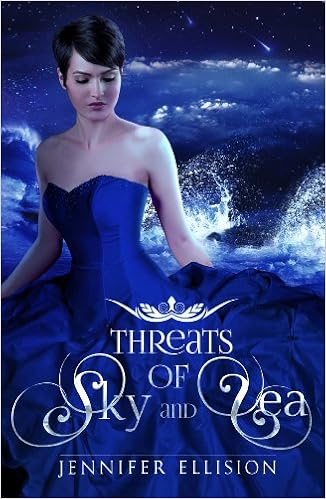
Review: Threats of Sky and Sea

Author: Jennifer Ellison
Genre: YA
Pages: 263
Warnings: Death, sparkles, tropes
Rating: 3.5/5

"Threats of Sky and Sea" by Jennifer Ellision is about Breena Rose, a secretly talented, feisty and gorgeous young woman on the cusp of adulthood who is being seriously underutilized as a barmaid. She has a run-in with some unsavory folks and discovers her daddy has been hiding her away from the world these last 16 years, and now she is to return to court and learn how to be a lady, kick ass at magic, meet a handsome prince all while trying to free her father. I gotta say, the lady keeps busy!

So before I say anything else, I have to state that I had fun reading this book. It was cute like a little puppy. I am going to see about getting the second one on my own steam.

As I have seen it mentioned, this book hits several YA adult tropes. That's accurate, it's plot points in bullet form read like a lot of other YA fiction. However these are feel-good story elements that are repeated so often because people like them. For example, the young woman in peril who takes charge of her own destiny is a trope I can get behind, no questions asked. Puberty being a time when magic blossoms and destinies are discovered sounds way cooler than the average high school experience. What's more notable to me are the tropes not taken. Ellison slips right around creating a love triangle, which makes me so happy words can not express. She also puts together her own magic system, to which I have a major weakness. Plus she doesn't shy away from killing off a character or two, which is a requirement for me to respect a book.

She also maintains an air of suspense around some of the major plot points. There's a lot left unexplained about the world, the magic system, and (to a lesser extent) Breena's past. It's likely this is a result of this being part of a several book long series, but regardless of the reason it's important to leave readers wanting more in any story. Ellison delivers in this respect. I don't just want to know what happens next, I'm curious about Neridium and the factors that determine one's magical element (crossing my fingers it's like how amphibians determine sex).

I do have a few less than complimentary points I want to raise though. Ellison spends more time explaining things that should be left to the reader to figure out. My impression is that the inexperience of the main character, Breena, is a convenient mechanism to enable explanations about the setting to the readers. It means we get paragraphs describing things like how the magic system works in the abstract in Breena's internal narration, as well as how Breena feels about it. To a lesser degree it means she acts as a stand-in for the audience to express confusion as to why things are the way they are. It makes everything feel a little flatter than it could. I would have liked to see more effort made to teach readers about a world the same way they learned about this one: through context and a certain amount of sassing one's elders. I chalk that one up to Ellison's inexperience as a professional writer, which means I look forward to seeing how her writing will mature.

Like a said, cute like a puppy. It's a nice story with accessible prose and I'm interested in seeing how everything develops.

Friday, May 23, 2014

LibraryThing Member Giveaway Review: White Hart

Author: Sarah Dalton
Genre: Fantasy
Pages: 220
Warnings: Violence/Character Death
Rating: 3/5

"White Hart" is the story of Mae Waylander, a mysterious young woman with the power to control nature and her faithful companion Anta. However her powers are in high demand, and when a local girl Ellen is kidnapped after pretending to wield Mae's powers, she reluctantly accepts the help of  Prince Casimir and they follow her into the Waerg Woods. Along the way they discover the woods just as dangerous as they've been warned, and there are more secrets hidden behind the trees than they could have suspected.

This is a good story with several emotionally complex, interesting characters. Mae, Casimir and Sasha are all a good blend of strong and able to depend on other people. All three of them are capable of some very badass action, but they also all have some internal struggles that makes it hard for them to respond to all threats. I appreciate the sense of realism that lends to the story, especially since despite everything else, they are all pretty young. In addition, there's a small amount of romance in the story, but it takes a major backseat to the action, which I was fine with.

In general I thought this was a solid YA fiction story. They plotline slows down a little in the middle of the story, but picks up again after Mae does some soul-searching. Most of the individual action scenes were well-written, and they carried the story well. It was a nice, easy read, but it kept me interested. However I don't think it would appeal much to someone who doesn't already enjoy YA fiction and magic.

What was especially interesting to me from a gender representation perspective is that even though women were overrepresented in the main characters (2:1), the overall gender breakdown was still slightly more in favor of dudes (11:15). There weren't a lot of characters in this story because most of the book is set in the middle of a forest. Therefore the disparity could be a coincidence, but I'm not entirely convinced. Maybe if I find a considerable amount of books that go the other way?

On another note, several of the characters were significant to the plot but weren't given names, so I kept track of all characters, regardless of how well they were named. I also kept track of any character that had a name even if they didn't appear in the story, like Mae's mother, who while dead during the book played a significant role in the main character's upbringing. Either way the ratio was quite similar, so I'm going to try and follow my previous standard, characters that are named (even if not with exact names, anything more complicated than "the woman"), alive or dead.
Graphs, motherfucker. Do you read them?


Tuesday, March 25, 2014

Member Giveaway Reivew: The Terran Gambit

Image taken from www.goodreads.com

Author: Endi Webb
Genre: Science Fiction
Pages: 235
Warnings: Character Death
Rating: 2.5/5

Endi Webb’s “The Terran Gambit” follows the All-American space jock Jacob “Shotgun” Mercer as he fights for the Rebellion to free Earth from the imposing clutches of the Corsican Empire. There are several battles between the primarily Terran rebellion forces and the empire in space, and the scope ranges from ground combat between marines, gunfights between two-man fighters and crushing conflict between gigantic warships. The story shifts between several points of view, primarily the hero Mercer, his friends Megan “Grizzly” Po and Ben “Manuel” Jemez, as well as Captain Titus, following the terrifying antagonist Admiral Trajan.

I’m of two minds about this book. I found the overarching plot to be entertaining, but while I loved following the villain I struggled to care about the protagonists. In the beginning of the book an earth-let rebellion is crushed when their major spaceport is leveled by a nuclear warhead. I enjoyed reading about the tactics used by rebel and imperial forces to position themselves for a final conflict. I also thought the pace of the action was excellent, as the plot starts on a high-intensity moment, dips during the bombing then steadily builds to an action-packed climax. I liked that the book incorporated a lot of cutting-edge theoretical physics (which admittedly went way over head) and showcases them very effectively during the space combat.

As a result of the gradual ramp in energy there was a lot of time to get familiar with the characters. I think Webb chose to be expedient by having his characters tell the reader their backstories in big chunks, but it sacrificed a lot of realism. For example, there is a paragraph where Jemez is walking down a corridor, and starts summarizing his childhood and early adulthood (1). It ripped me right out of the story. I can’t imagine a human doing that, besides which it doesn't actually tell me much about Ben Jemez. Is he happy that he learned all these things, or proud of them? Why doesn't he brag? And if he’s modest, why not introduce this information while Mercer is chatting up Jemez’s more impressive physical qualities as his wingman? Po and Anya Grace also divulge their painful histories in a page of densely packed information to relative strangers, which feels more like Webb is crossing off a column labeled 'backstory' than writing people. Therefore I was not interested in their triumphs or worried about their struggles, because they felt more like cardboard cutouts.

However I believe Webb is very capable of writing characters well and slowing revealing who they are through their actions. Mercer is described as a talented, cocky, space jock. Within the first two chapters he exhibits impressive flying skills, comes up with clever tactics, says some crazy stuff (2) and flies a spaceship towards nuclear warheads against direct orders, showing me he is all of those things. He’s also apparently catnip to the ladies, but since he sleeps with one person and she’s the one who picks up him, I’m going to assume that’s his overconfidence speaking again. Another good example is Lieutenant Alessandro Bernoulli, who has the best introduction line in the book (3). Admiral Trajan is my personal favorite, and I was actually cheering for him in the last battle. That man starts out scary and somehow manages to get more terrifying until you want to run away every time he shows up. Trajan notably has a section where he talks for a page or so about his own history but because he’s using it to hint to a subordinate he killed his own father at sixteen, shit. That is a well-written character. Even though I didn't like all of these characters, they had a well-enough written personality that I had an opinion about them.

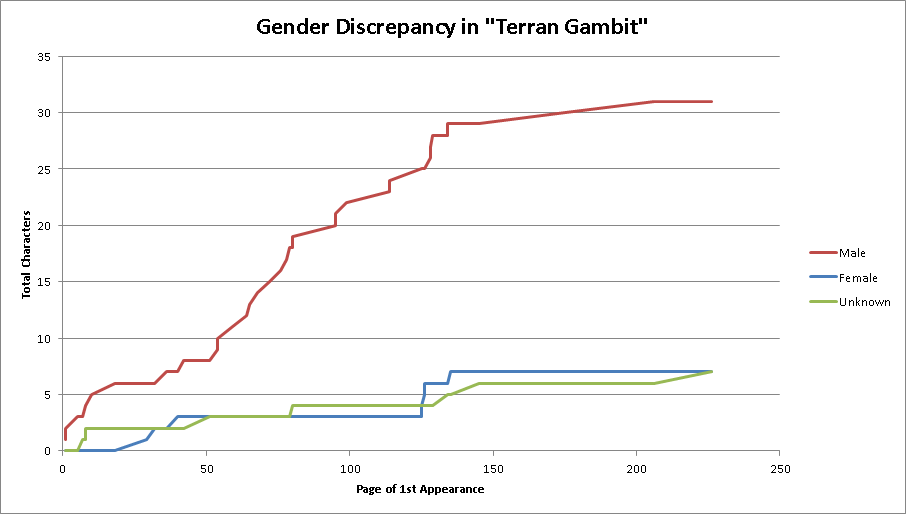
Another thing I felt was lacking is an internally consistent setting for the story to take place in. There’s a lot of lip service paid to an empire and rebellion that spans at least one galaxy (4), but very few characters aren't from earth and those that are never reference a heritage or even differences in their lifestyle and cultures as a result of growing up somewhere not earth (5). In addition very few recent events are mentioned by anyone, including Trajan, which is especially surprising as he knows a great deal about earlier history (6). Did nothing happen between 2014 and 2675? The most frustrating part is probably the huge gender disparity present in “The Terran Gambit”. Po and Grace are scoffed at for their discomfort regarding women in the military or even noticing that there are very few women around, implying everything is is rosy in the world of gender equality (7), (8). However of the 46 named characters in “The Terran Gambit”, 7 are women (9). That’s either the definition of a boy’s club, or everyone is in serious denial about a huge re-population problem on the horizon. These discrepancies between what the story says is happening and what is shown create a world doesn't hang together.

The hit-or-miss characterization and the weak setting worked together to make this a rocky reading experience for me. I probably only finished it because I promised to review it, and I would not be interested in reading the sequel.


--------------------------------
I apologize if the pages numbers are off, I was working from several digital copies that had conflicting page numbers. I am assuming 235 pages for the sake of this review.

(1) And so he devoted himself: not just to his academic studies as his parents demanded, but to every skill imaginable. He spent the hours he should have been wasting as a free-spirited teenager at the gym, or learning parachuting, or bow-hunting in the wilderness with the local young rangers group, or target practice at the shooting range with his neighbor, a retired Marine general and expert marksman. He insisted that his ever accommodating, upper-class parents pay for an increasingly pricier range of classes, usually private instruction from one of North America’s premier masters of martial skills or craft. Kickboxing, karate in all its forms, wrestling … he did it all, developing a lean, muscular physique other teenage boys would have killed for, but as it was they ignored him—he seemed too self-assured, even cocky, for their tastes. (pg107)

(2) “He would not lose this fight, dammit.” (pg 1)

(3) A man with exactly one half of a mustache. (pg 96)

(4) Not to mention the ongoing conquests of the Corsicans. By last count, they had recently conquered their six hundred and twelfth planet out of the thousand or so settled worlds.
And over sixty years ago, Earth was the five hundredth—almost like an anniversary prize for the Corsican Emperor on his golden jubilee. (pg 5)

(5) “An Old Earth term, Captain.” (pg 133)

(6) “When Gioachino Rossini died, you know Rossini, right?” Titus nodded—how could he not know the composer of the William Tell Overture? “When he died, Verdi submitted a proposal to the greatest Italian composers of his day to collaborate on a Requiem Mass to honor him. The others agreed, and Verdi quickly busied himself with his contribution. But it soon became apparent that the effort was becoming mired in bureaucracy and politics, and rather than see his contribution languish, he wrote the entire mass himself. He then rededicated it to the also-recently-deceased poet Alessandro Manzoni. Now, Manzoni wrote many things, yes, but perhaps his most important work was the novel The Betrothed, which later became a symbol for the Italian Risorgimento—the political movement that sought to establish one unified Italian kingdom over the petty states that made up the peninsula at the time. When Manzoni died, the Kingdom of Italy had been made fact, and Verdi wanted to honor him, and by extension, Italy. Captain, am I boring you?” (pg 120)

(7) “Let’s just say I go to some interesting parties with the gal-jocks on our girls’-night-outs.”
Gal-jocks? Ben rolled his eyes at her anachronism—sometimes she seemed stuck in the twenty-fourth century. (pg 63)

(8)“Look, if you want to survive in a fighter squadron, if you want the boys to take you seriously, you’ve got to be not only better than them, you’ve got to own them. Overwhelm them. If I didn’t do this, none of them would take me seriously.”
Po turned and regarded her, wondering if she was serious. “You think that?”(pg 140)

(9)
I made a graph breaking down character gender. In times of great stress, I make graphs.

Saturday, April 6, 2013

Pop Review: Prey


Author: Michael Chrichton
Genre: Science Fiction
Pages: 258
Warnings: Character death
Rating: 3.5/5

Prey is a science fiction drama that answers the question “What would happen if a self-sufficient, violent AI went rouge?”


Crichton’s story answers while delivering a plot that keeps you busy in a bold, engaging style. I found it to be a fun read to finish in one or two sittings. In addition you can consider some of the cool implications of distributed computing and nanotechnology while you read.


However if you’re looking for a story that challenges your observational skills or tests your philosophical inclinations, back off. This book is basically just action. The characters are simplistic and the only thing I was worried about was who would survive (other than the narrator).


On the other hand, not all novels are about in-depth characterization, so if you liked other Crichton or Clancy books, pick this up and prepare to enjoy. If you’re going on a long airline flight this is also a good choice. Have fun!

Edited: Cross-posted at LibraryThing and Amazon.

Monday, January 30, 2012

Member Giveaway Review: Secrets and Lies

Author: Tracy James Jones
Genre: Fiction, Slightly Erotic Fiction
Pages: 158
Warnings: Grammar Carnage, transphobia?
Rating: 2/5

This novel follows the lives of Ken Jordan, Cami Vargas, Ulanda Jefferson and Bren Searcy as they unravel the secrets they each keep. The novel starts with Ken and Cami having an affair, which Cami confides to her best friend, Ulanda. However it turns out that Ken's affair happened right before he proposed to Bren, and Ulanda and Bren have a close relationship of their own. Throughout the book, these four characters reveal to each other some secrets you know about and some you don't.

 My first feeling upon finishing this book was that there was something slightly wonky about the plot. In actual chronological order, Ken and Bren are highschool sweethearts, but Ken breaks up with Bren because he's a jock. Bren parents Ulanda with a different person (not a major character). Several years pass, Bren gets back together with Ken. Cami and Ulanda become friends. Ken cheats on Bren with a lot of people, including Cami, then asks Bren to marry him. Cami gets pregnant and gives the baby to Ken's parents. Bren gets upset about this and goes back to her hometown to talk with Ulanda about all of this, and then Bren meets Cami. None of these plot devices are unbelievable, but they do seem extremely ridiculous when taken together. Or at least, they are the actions of rational actors who I can not empathize with at all.

In addition I was freaking offended by the treatment of Ulanda's bio-mom. Apparently Bren got pressured into sex with a trans man, which was probably rape. However no one could be damned to used the right pronouns, or treat him with any decency. This was especially startling to me after the attempts made to treat Bren, a trans woman, with respect. Apparently you only have to respect the rights of trans people you like.

This book just didn't grab me. I couldn't convince myself to like the characters, with the exception of Ulanda.  I can't suggest this book to you unless you like cheesy romance novels.

Saturday, January 21, 2012

Review: The Handmaiden's Tale

Author: Margret Atwood
Genre: Distopian Future Fiction
Pages: 324
Warnings: Holy shit, so much.
Rating: 4.5/5

"The Handmaid's Tale" by Margret Atwood is set in a dystopian future where a fanatical religious organization has taken over the US government and enforce a restrictive hierarchy. The main character, Offred, is one of the few women left in the country who can successfully reproduce, so she's been forced into servitude. This novel is her fictional first-hand account.

There is so much I love about this novel, I have trouble picking a place to start. If there was a gun to my head, I would start with just how fucking scary this novel is. There is such horrific dehumanization of every woman in the world Offred lives in this world that I shudder to imagine something thinking about me (and my female ass) that way. We don't even know the main character's name: Offred is literally "Of Fred", Frederick being the head of her household. She has no humanity outside of being a keeper of his sperm. That is pretty damn scary, until you consider how everyone deals with this enormous decay in women's rights. They just go on. All of the characters are trying to just get through the day, and they do that by pretending all the horrible things being done to them and the people doing those things to pretend the all the horrible things being done to them by real people are just happening. Once you realize how easy it would be for people here and now to ignore on that scale, you start waking up in a cold sweat.

There's also something really amazing about Offred's narration style. Some authors find the first person perspective to be stifling, because the scope of one person is often to small to encompass the plot. Atwood doesn't fumble around trying to get Offred to listen in on the right conversations to find out what Old Man River is up to, she incorporates the supposed limitations of the 1st person narrative into her story. Only being able to see what Offred sees, we're trapped looking between the confines of her habit, and the claustrophobia a reader feels is not unlike her's. Every aspect of Offred's narrative, from her hesitant grasp on reality to the tiny window of the world she can see, is finely crafted to put the reader in her painful shoes. It's wonderful so see a story where there is not a wasted word.

I can't get enough of this book, and I expect you won't either. I won't lie to you and pretend it's an easy read, since the narrative style is intentionally a little frustrating. However this is one of those books where the feeling you get when everything Atwood has orchestrated comes together is well worth any discomfort you felt along the way. This book isn't just a good read, it's got a lot to consider about human nature at it's tasty center. And if that stirring endorsement doesn't encourage you, realize this is a realiatively short book, so dig in. 

Sunday, January 8, 2012

Member Giveaway Review: Tempest

Author: Holly Hook
Genre: YA Fiction
Pages: 190
Warnings: Ahoy Plot Holes, Spoilers
Rating: 3/5
Series: 1/?

"Tempest" by Holly Hook is a YA fiction book, the first in the "Destroyers" series. It follows the main character, Janelle, after she moves to Florida and strange stuff begins happening. Janelle and basically everyone she knows or is related to is a Tempest, a strange sub-group of humans that become hurricanes once in their lives, and can do that really cool thing with their eyes that's shown on the book cover.

Before I say anything else, I want to make it clear that the premise of this book is freaking awesome. I cannot stress that enough. I don't pretend to understand that people who can turn into hurricanes any time they fall in salt water only do so once in their lives, because if I could turn into a hurricane, look out coastal cities! I did some research, and was a little annoyed to discover the named hurricanes that the WMO picks repeat every six years, but I stick like the concept that Tempests have a government mandated role call. If you've already read the book, feel free to follow the same wikipedia/google trail I did and be disappointed there is no Hurricane Adriana (although there have been several Adrians) or Hurricane Janelle in the real world. I am not against fiction books that borrow part of their information from reality, but I guess I was a little surprised by how easy it would have been to incorporate real hurricanes and give the book more of a "hidden world within a world" feel. Even though the ability to become some of the scariest, most powerful tropical storms is just fantastically cool, I would have preferred Hook had either completely veered off into a fantasy setting or maintained a more accurate representation of where the Tempests could have fit into our world.

I also really appreciated the characterization of Jenelle, Lucas and Greg in this book. I am crushed when I read books where the teenage characters sound and act more like some adults ridiculous caricature of teens, or characters that jump right from being pre-pubescent to being adults. Hook breathes life into Janelle, and into that awkward place where teenagers reside, which I loved. The developing relationship between Greg and Janelle was especially believable, not to mention cute. I am a suspicious person by nature, but their stolen  moments warm my heart. I got very caught up in those scenes, and the transparency of Janelle's reactions. In general I think Hook has strong talents when it comes to portraying teenagers, and teen interactions.

However I didn't feel the depth of characters extended to some of the the adults (ex: Adriana, Mr Deville). I can't tell if the lack of well developed personalities because they weren't main characters, their actions were more plot than personality driven or if it was a conscious effort to help illustrate Janelle's snap judgments. It would be really cool if they were a result of some method writing, but I'm not comfortable assuming that. Sometimes this bothered me, but certainly wasn't a deal-breaker.

I am a stickler for internal consistency in a story, so I take umbrage with a few of the plot points. I realize how silly this may seem to someone else, but it frustrates me that not all named tropical storms are Tempests. I don't understand why it was mentioned in the book. Additionally it makes little sense that there is a magical system that knows when when it's someone's turn to become a Tempest (and can halt all the other Tempest's ability to become hurricanes) down to the day but none of the actual Tempests seems to know even what month they should become a hurricane. It's also odd that there was very little about Tempest culture explained, but somehow Adriana knows how to brainwash the Tempest subconscious. I wouldn't normally bring up all of this, but the crux of the issue was that all of these plot devices could have been incorporated reasonably well, but at the time they all felt too convenient to me. Janelle would never kill people on purpose? Suddenly, Adriana can control her subconscious by playing only one tape while she's asleep for an hour (while back in reality brainwashing of an unwilling participant can take years under special conditions). That is just an example of the frustrating plot holes in this book. Said plot holes dragged me out of the book to complain, which is not an ideal reading experience.

It may look like I have a lot of complaints, but I really did like this book. I'm just kind of pushy. So while I have a few complaints about the deus ex machina style plot devices creeping into Hook's novel, they did not overshadow the excellent characterization and straight-up awesome premise. I was definitively entertained, even though I usually prefer to avoid YA. If you are a teen or just like reading teen fiction, I would strongly recommend this. Jump all over it!

Sunday, January 1, 2012

PLH's Top Ten Book Suggestions for 2012

So, one of my friends asked for some book recommendations... a few days ago. Here they are, in no particular order. Enjoy!

1. Reality Bites Back: The Troubling Truth about Guilty Pleasure TV

2. The Handmaid's Tale

3. Young Miles & Review

4. The Left Hand of Darkness

5. And Then There Were None & Review

6. Delusions of Gender: How Our Minds, Society and Neurosexism Create Difference & Review

7. The Girl with the Dragon Tattoo & Review

8. The Book of Lost Things

9. A Game of Thrones: A Song of Ice and Fire

10. Warbreaker

They're all pretty awesome, although it's kind of obvious now that I look at this list my preferences are skewed towards gender politics and I prefer fantasy over science fiction. Anywho.

... Now I'm all out of books! Does anyone else have some suggestions of their own?

Monday, December 26, 2011

Pop Review: The Birth of Venus

Author: Sarah Dunant
Genre: Historical Fiction
Warnings: Rape, Misogyny, Death, Asshole Priests
Pages: 416
Rating: 3/5

"The Birth of Venus" by Sarah Dunant is the coming of age story of Alessandra Cecchi, a young woman in 15th century Florence. Like many mainstream stories about young adults, this book is not for teenagers, or even written by teenagers. Do not ask me why, apparently everyone wants to keep reliving the same four hormone-ridden years in high school. Sadly for us Florentine isn't so hot on women having lives outside of gratefully raising children, so some parts of Alessandra's story are remarkably predictable: she doesn't know anything about sex expect for those tinglings in her britches until marriage, where regardless of her personal feelings or ambitions she settles down to have a kid. No matter how overdone I think coming of age stories are, this one has a few surprises up it's sleeve. For starters, her city is in turmoil and there is a rather scary priest rising to power during all of this.

For one, Durant's characterization was great. All of the characters were as fleshed out as their role required and their interactions were believable, especially the awkward teenage groping! I have my doubts that the idioms and slang are historically accurate, but luckily that's not what I was reading this book for. My absolute favorite character was Alessandra's husband. Since there is a theme of woman's lib running throughout this book, it would have been easy to make him a villain, nor was he some fumbling buffoon. Instead Durant creates a man who is poised, intelligent man who was also suffering under the pressures of Florentine society, with a very human set of blind spots. In my mind he remains the best example of Durant's ability to create complex and empathetic characters in this book.

I typically enjoy historical fiction but this particular period didn't come across as very interesting to me. I'm not sure if it's because I have about as much fascination for paintings as a cat does (which is to say, only if there's a bug on one) or if Durant presented the least appealing bits to me. I feel this way because the location and time period had very little affect on the story itself. Sure, sure she got married when she didn't want to. There are certainly no where else during that era and no other time period in history when women got married because it was expected instead of out of love. Her city fell at least partially under the sway of a radical man. The only obvious way in which this affected Alessandra's life was one or two scenes where she didn't go to church and where she got hassled for walking outside after dark. Hell, Florence getting invaded by an army had only one affect on the story that I could see: Alessandra's wedding date got moved up. This may have been a historical fiction, but the history functioned primarily as a background for the plot. This is not an inherently bad thing, but I do feel it's worth pointing out. It's also totally why I am not mentioning anything about painters.

My main complaint about the plot is that there was not nearly as much action as I was expecting. I respect a good story that doesn't have sweeping story arcs that encompass epic events, but only when I'm not promised them. Even the really dramatic twists were rather underplayed, and everything had a haze of normality to it. This could just be me, but I swear the prequel suggested the book contained a lot more sex (or at least sexual tension) which it failed to deliver on. I kept reading until the last chapter waiting for something more impressive than a few mildly vanilla sexual encounters and perhaps the least awesome explication for her tattoo. Seriously, I can not even imagine a less cool way for Alessandra to have gotten that tattoo.

There is a very reasonable argument to be made that stories full of real, not dramatic people trying to successfully navigate the challenges of their daily lives wouldn't come of as dramatic, to which I say: "Pah." I am reading a book about a teenager. I remember being a teenager, and let me tell you, every day was the Thor-damned end of the world. On the other hand, gentle reader, you may not feel the same. I suppose my final assessment would be: I've had better. If you really enjoy the romances of teenage girls (really?) or 15th century Florence, have I got a book for you. If you have a quiet afternoon or two and nothing to do, go for it. Otherwise find a different book. There are plenty other fish in the sea!